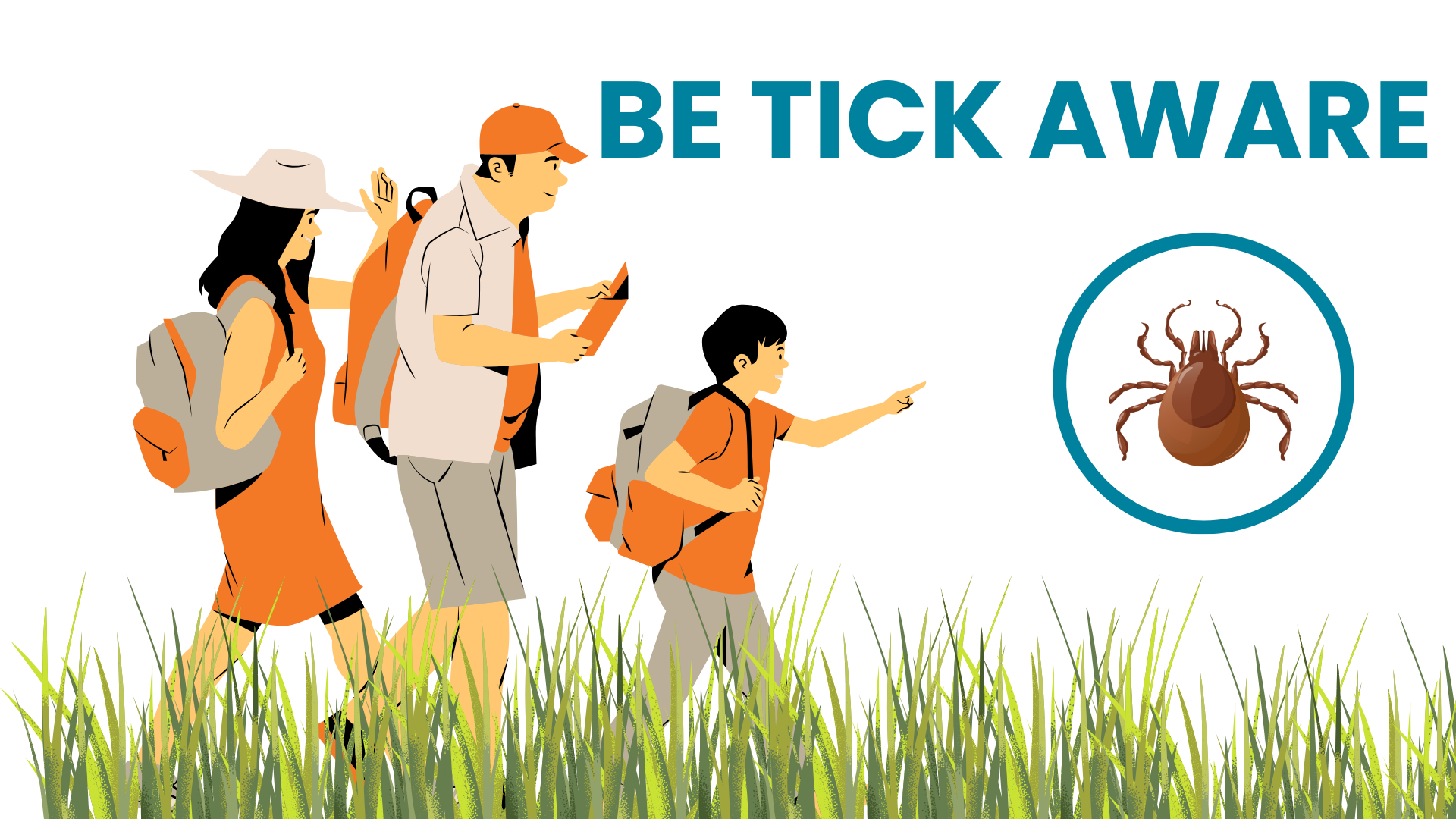
24- 30 March is Tick Bite Prevention Week, the ideal opportunity to find out how to avoid ticks and safely remove them.
As lighter evenings and warmer weather approach, we're more likely to spend increasing time outdoors as part of a healthy and active lifestyle. So, it's important to be aware of the risks around tick bites, how to protect yourself and reduce the risk of tick-borne infections.
April to June is peak time for nymphal tick activity. Simple measures you can take to prevent encountering ticks are:
- regularly check clothing and exposed skin for ticks and brush them off immediately
- walk on clearly defined paths to avoid brushing against vegetation where ticks may be present
- wear light-coloured clothing so that ticks can be spotted
- use an insect repellent (always follow the manufacturer’s guidance)
- wear long trousers and long-sleeved tops to make it more difficult for ticks to find a suitable area to attach
- after spending any time outside, check yourself, your clothing, your pets and others for ticks. Ticks can bite anywhere on the body
The advice below will help you to safely remove a tick and to recognise the symptoms of secondary illnesses, such as Lyme disease.
- If you spot a tick, you must remove as soon as possible using a tick-removal tool or fine-tipped tweezers. These can be purchased in pharmacies
- Fine-tipped tweezers are different to regular tweezers that might be used to remove eyebrow hair. Fine-tipped tweezers are very narrow and pointed at the tip and ensure that ticks are not squashed during removal
- To remove a tick, grasp the tick as close to the skin as possible and pull upwards slowly and firmly
Being bitten by a tick can put you at risk of catching Lyme disease. If you think you have been bitten by a tick, please follow the NHS advice on Lyme disease: www.nhs.uk/conditions/lyme-disease.
One of the most common symptoms of Lyme disease is a bullseye rash around the bite which can develop between 3 – 30 days after being bitten. Other symptoms can be flu-like symptoms, nerve pains or a droop on one or both sides of face. If you have any of these symptoms, contact your GP or call the NHS on 111.