
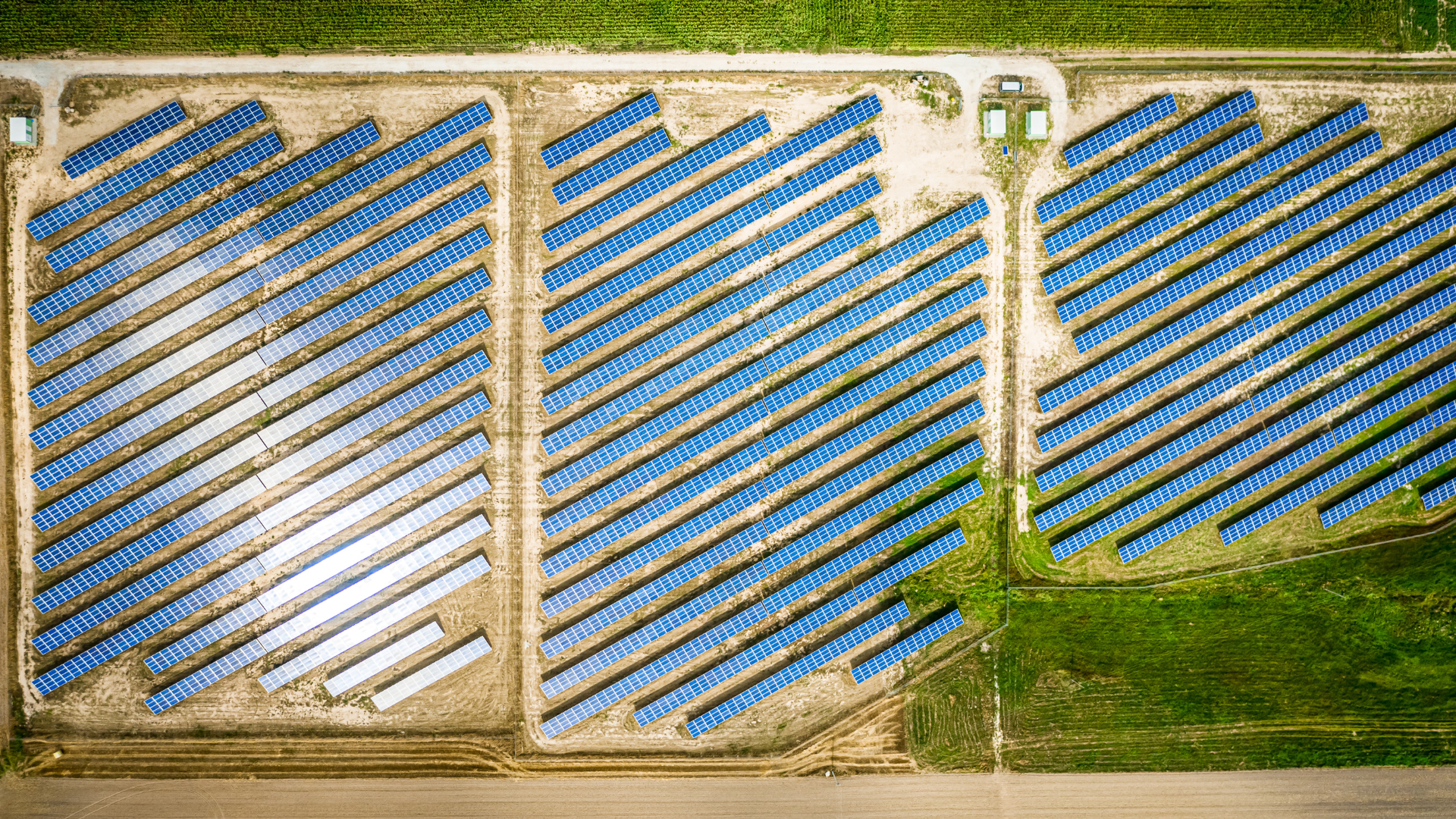
UK’s largest solar farm development given government approval on productive farmland.
The recently-approved Springwell Solar Farm will cover around 1,280 hectares of land near Scopwick in North Kesteven. Of this, around 580 hectares will utilise Best and Most Versatile (BMV) agricultural land.
Lincolnshire is one of a handful of regions in the country with significant areas of BMV land, and the county plays a vital role in producing food for the nation.
BMV has been clearly outlined as strategically important by the Government for ensuring our food security. And in DEFRA’s recent Land Use Framework for England, a core principle regarding ‘right use, right place’ aimed to prioritise land uses that align with local context and are spatially sensitive, with high-quality farmland given as an example.
In the same document, DEFRA has indicated that just 1% of England’s land will be required for renewable energy by 2050 to meet national climate targets.
Despite this, in total, around 8,500 hectares of solar developments in Lincolnshire are either already operational or have received planning permission. This equates to roughly 1.2% of the county’s total land area and 1.5% of its agricultural land, the equivalent of more than 6,000 football pitches when fully constructed.
The Leader of Lincolnshire County Council, Cllr Sean Matthews, criticised the decision to approve a further solar development, saying: “It cannot be right that predominantly rural areas like ours are expected to continue shouldering the burden of energy demands driven largely by urban centres. It’s industrialising our rural communities, consuming our farmland and fundamentally changing our landscapes.
“This latest approval highlights the clear contradiction in government policies. On one hand, DEFRA says we need to safeguard our best and most versatile land, while on the other, the Net Zero arm of Government continues to push through developments on some of the country’s most productive farmland.
“If the Government is serious about fairness and improving national food security, it must stop disproportionately targeting areas like Lincolnshire and reconsider developments that use our best agricultural land.”
Developers state that Springwell Solar Farm could generate enough electricity to power more than 180,000 homes each year.
And, on approving the application, energy minister Michael Shanks said: “We are driving further and faster for clean homegrown power that we control to protect the British people and bring down bills for good.”
Councils and residents voiced their concerns throughout the NSIP application process, but the Secretary of State’s approval reaffirmed long standing issues with the process for some.
Cllr Danny Brookes, executive councillor for Planning and Environment, said: “Communities are encouraged to engage with these applications, but too often their views are treated as a tick-box exercise.
“This development at Springwell doesn’t even have an existing or approved connection to the National Grid and, against recommendations from the examining authority, the Secretary of State has said that development does not need to wait for a substation to be approved before going ahead. This wilful ignorance of legitimate issues raised by residents, local councils, and the examining authority shows the typical procedure with Nationally Significant Infrastructure Projects (NSIPs).
“Since the NSIP process was introduced in 2010, no application in Lincolnshire has ever been refused. Nationally, since the current Government took office, only one NSIP application has been rejected. The process seems designed to force through developments, regardless of local views, opinion or evidence.
“Six months on from Government's consent for Tillbridge solar farm, we’re already seeing another super-sized site approved on Lincolnshire’s farmland. With more applications in the pipeline, and Government openly committed to going further and faster than before, I have no confidence that there is a limit for how much agricultural land can be taken for solar.
“In approving this application, the Secretary of State acknowledged ‘there are no adverse impacts of sufficient weight, either on their own or collectively’. I think that is an insult to local residents, to farmers who are being priced out of growing on our most productive land, and to the people of Lincolnshire who’ll be affected by NSIPs that are overwhelming areas of our county.”
Find more information relating to the Springwell Solar Farm on the Planning Inspectorate’s website.