
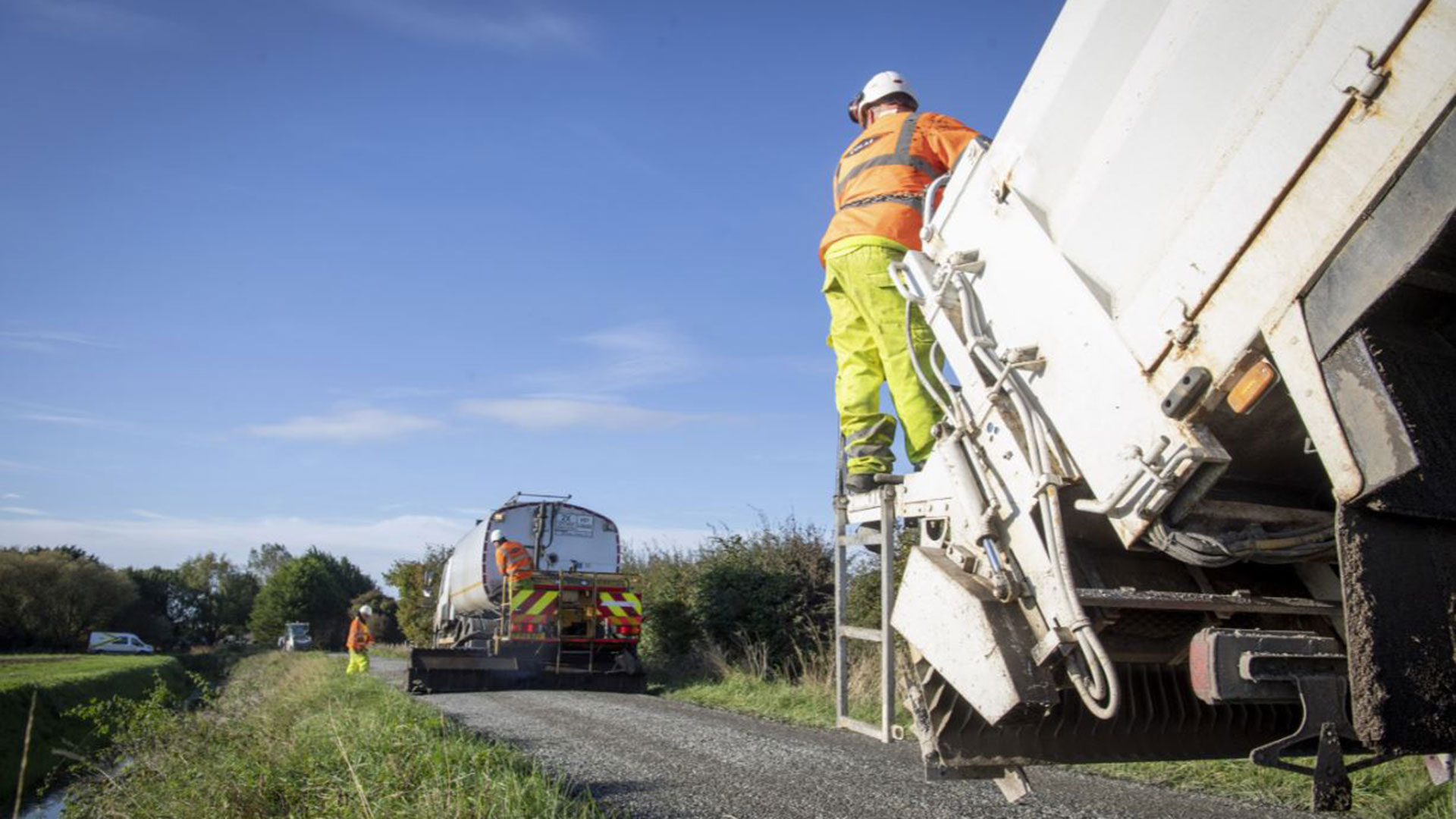
Another chunk of road improvement going on local roads.
It’s great for the road network. It’s a cost-effective way of making repairs that last. It’s better for the environment and it’s a BIG part of LCC’s plans for the roads in 2026.
We’re talking about a way of improving roads that’s called ‘in‑situ retread and regeneration’, which sounds complicated, but simply put makes perfect sense as part of a clever way to deal with Lincolnshire’s road network in 2026.
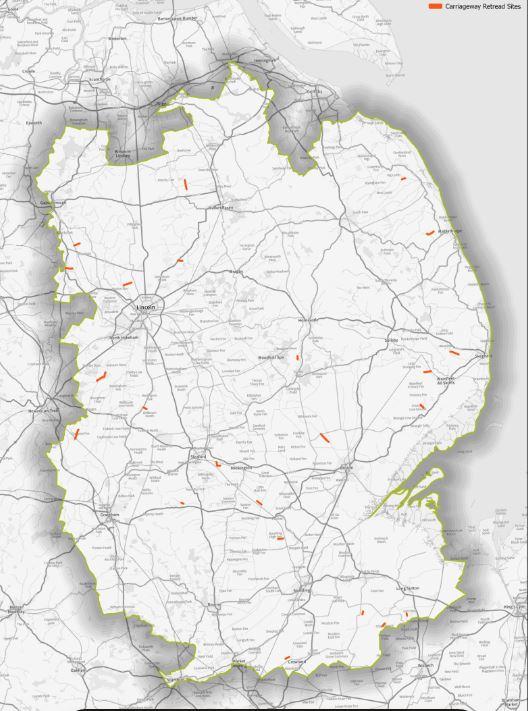
Running alongside LCC’s up-and-running £6 MILLION surface dressing scheme works to keep roads in good condition, the in-situ programme will see a different method used to boost routes further. County-wide, in-situ is costing £4.5 MILLION in its own right and will see 24 roads treated across two phases of work happening during this year’s spring and summer.
Those 24 roads add up to around 28,000 metres of road that will get the state-of-the-art treatment. That’s around 17.5 miles, or the same as driving between Boston and Lincoln.
Why do we need in-situ retread and regen?
It’s worth knowing the difference between the two surface schemes that LCC is using this year so that we understand why each is chosen to treat different road issues.
With surface dressing (sometimes known as chip and tar) the loose stone treatment is used to seal and protect roads that are still in a good condition. By putting a Surface Dressing scheme on a road the surface then stays protected in a cost-effective way that can last a decade. It’s preventative and it works. A bit like creosoting a fence to stop it rotting away in bad weather. But just like that fence, it’s only effective when the road is in decent condition to start with. If the road is badly worn or littered with potholes then Surface Dressing won’t work.
Which is when in‑situ retread and regeneration steps in. This is a specific scheme that is used in more severe cases where roads need a deeper repair. The top of the iffy road is broken up and reworked into a batch of materials that can be re-set to create a new top layer.
Using both treatments at the same time means that Lincolnshire County Council can target the right solution to the right road and look after more of the network overall.
Recycling roads in place
A key part of the programme is the reuse of existing materials.
Around 9,000 tonnes of recycled materials taken from planning the top off other highway works will be used as part of this year’s scheme. This reduces waste, limits the need for new materials and really cuts down on the amount of back-and-forth lorry movements that you usually need to deliver all those new materials to site.
It can also mean that we don’t have to rip up an entire road to rebuild it, instead of removing the road completely and rebuilding it, the existing surface is recycled and strengthened on site before the new surface layer is applied.
When the recycled roadworks take place?
Phase 1 has started now and will run until Thursday May 21st. Phase 2 is planned to run from Monday July 6th to Friday August 21st.
It’s worth noting that these dates are weather dependent, so may shift a little if we experience any major wet weather.
Phase 1 locations:
Works are planned at the following 17 locations during Phase 1:
- Graves Hill, Welbourn
- Sand Lane, Torksey
- Willingham Road, Marton
- Mickleholme Road, Dunholme
- Fen Lane, South Carlton
- East Row, South Somercotes
- Billgate Lane, Burgh Le Marsh
- Howgarth Lane, Friskney
- Mount Lane, Kirkby la Thorpe
- Green Lane, Dembleby
- Engine Drove, Helpringham
- Gravecoat Lane, Quadring
- The Common, Crowland
- Stoton’s Gate, Holbeach St Johns
- Broadgate, Sutton St James
- Bad Gate Road, Sutton St James
- Parsonage Lane, Tydd St Mary
Phase 2 locations
Seven further sites are planned for Phase 2:
- Castledyke Bank, Gipsey Bridge
- Stain Lane, Theddlethorpe
- Steeping Road, Thorpe St Peter
- Gulham Lane, Kingerby
- Oster Fen Lane, Claypole
- Clay Lane, Norton Disney
- Roughton Road, Kirkby on Bain
What will you see us doing?
If we’re working on a road near you then residents affected by the works will receive advance letters explaining exactly what will happen and when.
Temporary traffic management, including short‑term road closures or restrictions, will be in place where needed so work can be carried out safely and the actual process includes preparation of the existing surface, recycling and reworking it in place, and laying and compacting a new surface layer.
Road markings will be reinstated after the works are completed.
Want to know more?
Find out more about road maintenance.