
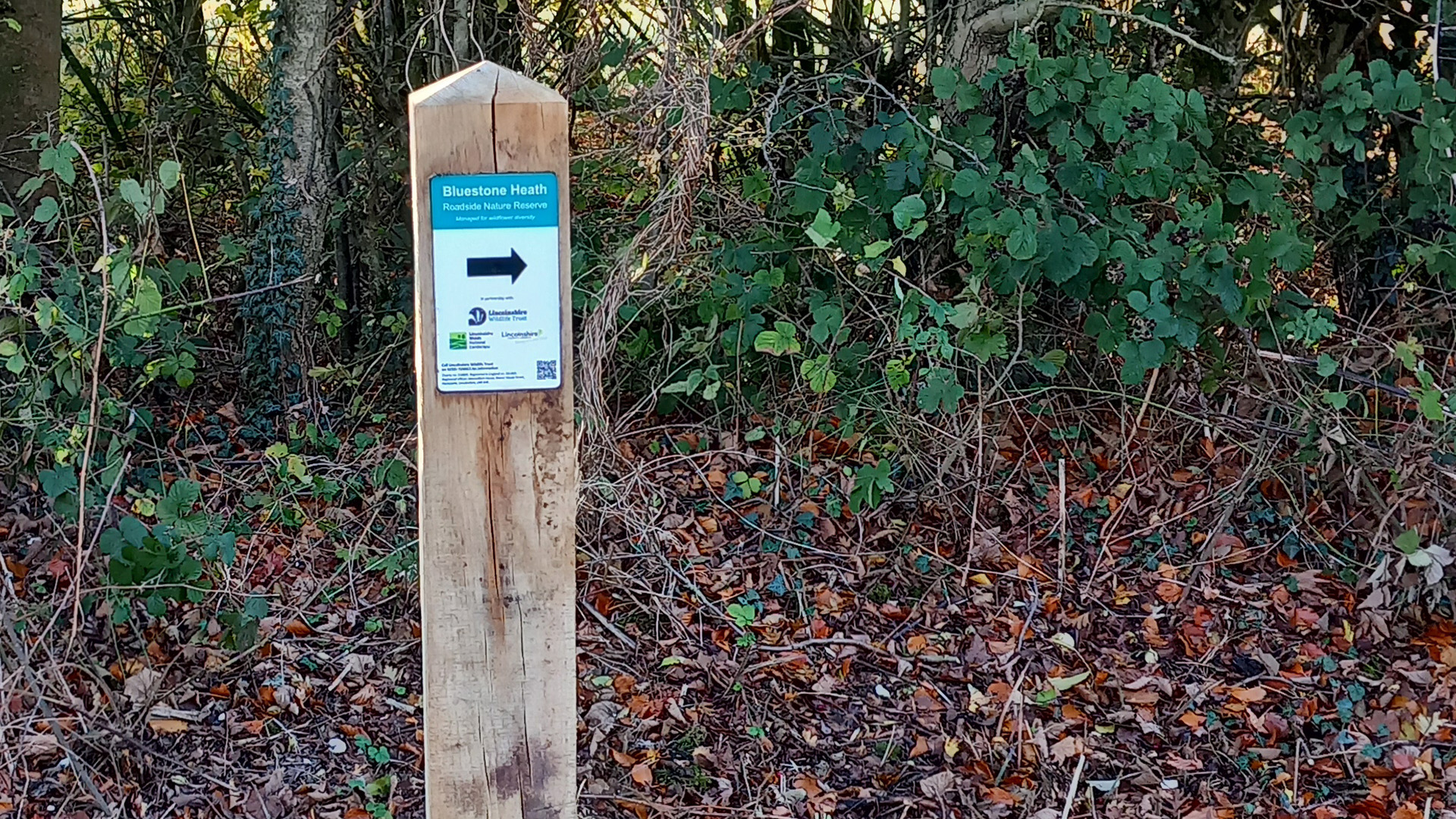
Lincolnshire Wolds get new stand-out posts to highlight important roadside wildlife areas
Lincolnshire County Council, Lincolnshire Wolds Countryside Service and the Lincolnshire Wildlife Trust have come together to make a mark on the local landscape for the benefit of wildlife.
In total, 57 posts that were paid for by LCC have been installed at 16 Roadside Nature Reserves, with the last one going in last week. Many of the older markers had either gone missing or were too damaged to be useful, so the new posts plan was put in place to help make the sites easier to spot for both conservation teams and those who want to get closer to nature.
As part of LCC’s wider work on roadside habitats, the county now has 66 designated verges and 159 roadside Local Wildlife Sites. The council is working closely with the Lincolnshire Wildlife Trust to look at how these can be expanded, and to explore other ways highway verges can be managed to support wildlife and biodiversity.
To maximise the benefit to wildlife, some verges are not cut at all which might include those next to village greens, parks and open spaces, cemeteries, churchyards and trunk roads such as the A1 and most of the A46. This sits alongside the new posts project as part of LCC’s ongoing approach to managing roadside land for nature.
The county-specific project has been funded through the Lincolnshire Wolds Grant Scheme, via the Lincolnshire Wolds Countryside Service, with the oak used coming from local sources to then be processed by C M Nichols Sawmill near Louth. The sign panels were made by Web Signs in Skegness, keeping the whole job in local hands.
Helen Gamble, Project Officer at the Lincolnshire Wolds Countryside Service said: “It’s so good to see these posts across the Lincolnshire Wolds National Landscape. Not only do they highlight the special qualities of the Roadside Nature Reserve network, but their bespoke design fits with the traditional look of the road network too.
“Using local timber really does add local benefit to all aspects of the project. The larger posts are more visible too, helping raise awareness of our unique grassland habitat.
“The new posts will support conservation work, help with plant surveys and reduce accidental damage and by doing them in this way it is a good example of LCC’s wider sustainability efforts.”
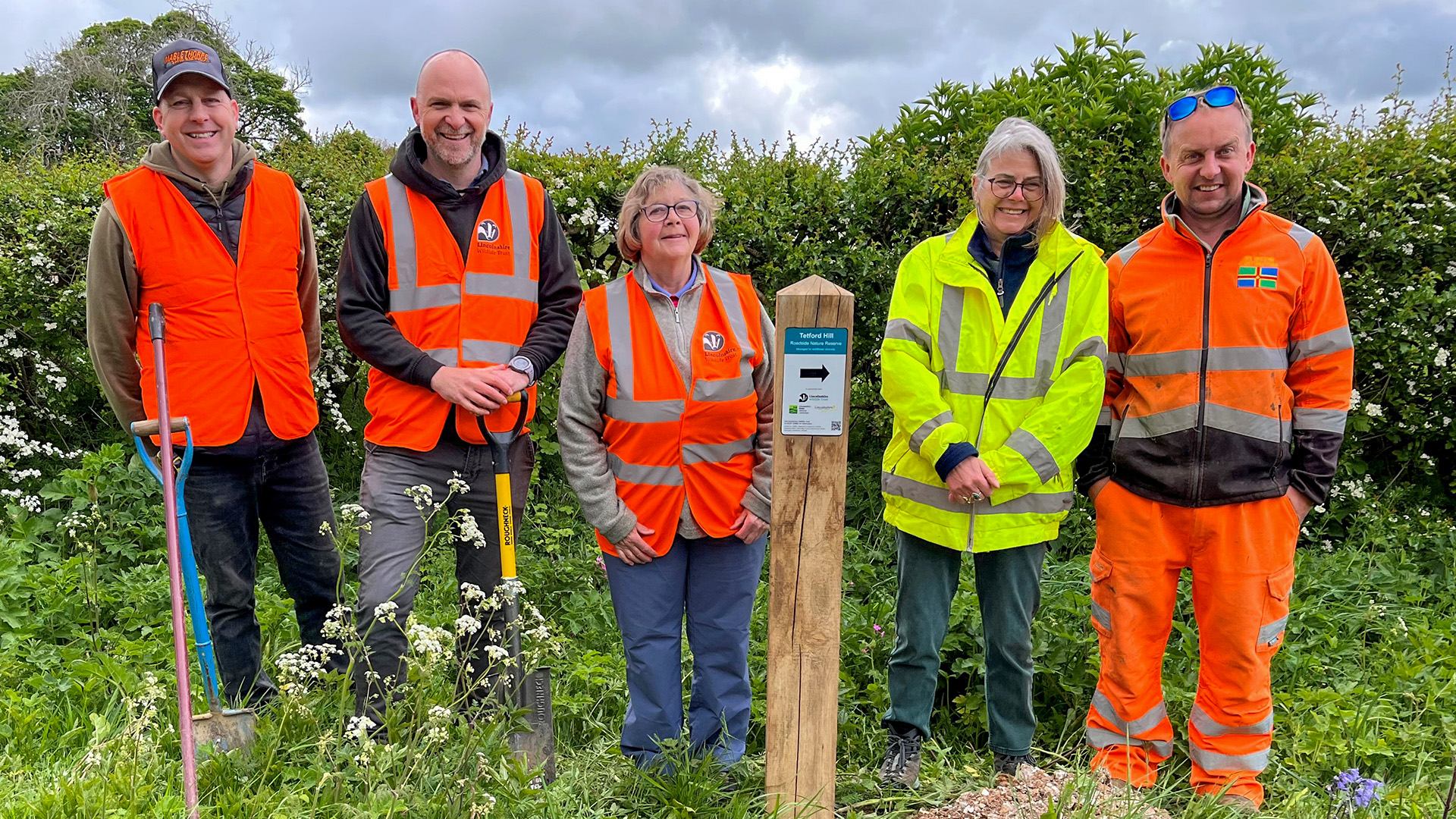
From left to right: Steve Nicholls (CM Nichols Sawmill), Aidan Neary (Conservation Officer, Lincolnshire Wildlife Trust), Clare Harrison (Chair of RNR scheme), Helen Gamble (Wolds Countryside Service), Ian Moore (installation contractor)
The county with a Conservation ‘first’
Lincolnshire was the first county in England to set up a verge conservation scheme. Its wide roadside verges, full of wildflowers and home to insects and small mammals, make up the largest remaining area of semi-natural, bug-friendly vegetation in the county.
The Lincolnshire Wildlife Trust has been protecting key verges as Roadside Nature Reserves since 1960. The network now covers more than 50 miles and is managed with support from Lincolnshire County Council, Natural England and volunteer Wayside Wardens. From 2025 LCC expanded its work by using cut and collect machinery to bring more RNRs into regular management.