
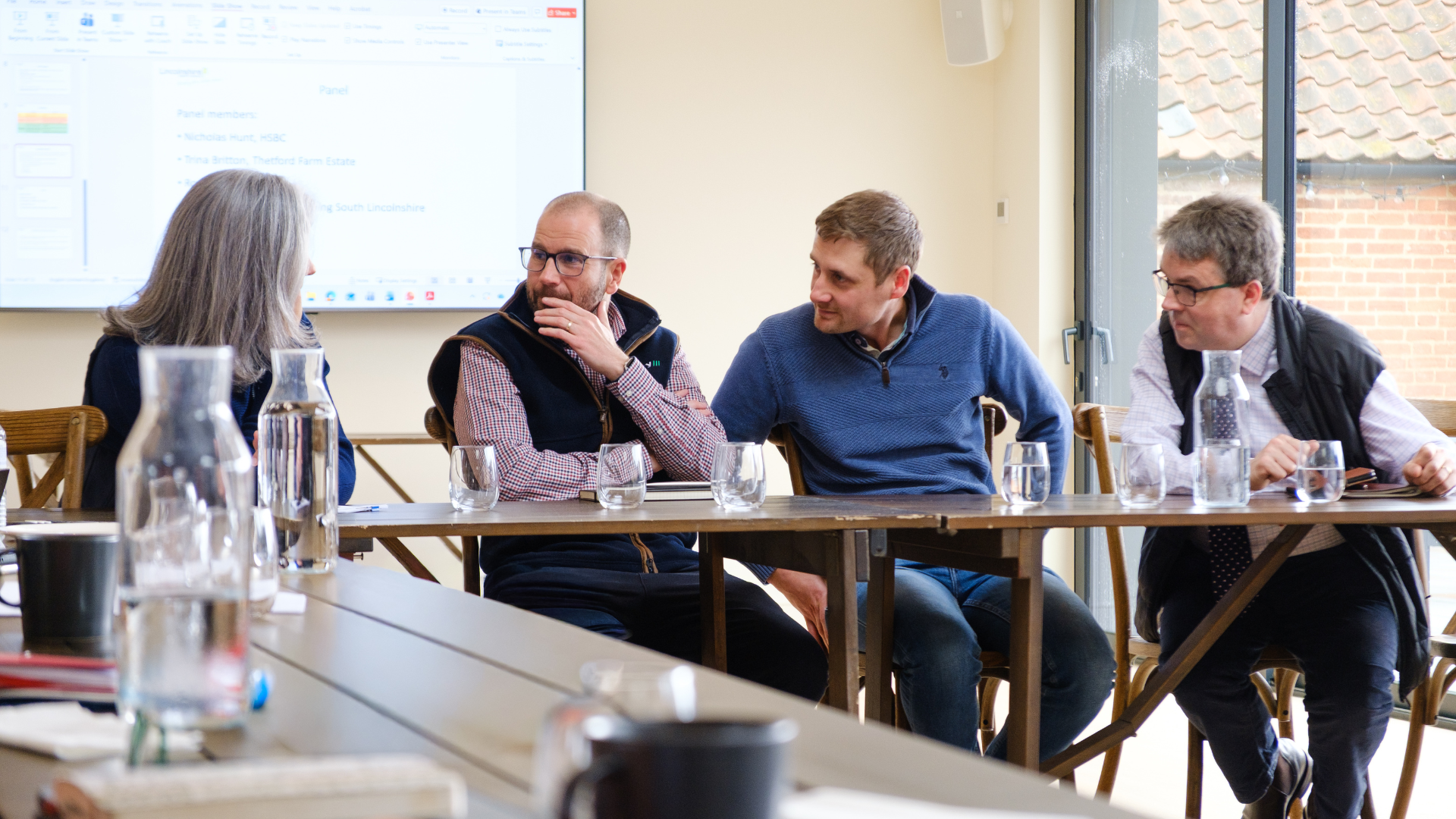
Agri-forum discusses challenges, investment and diversification in bid for long-term sector profitability.
Rising fertiliser, energy and labour costs have squeezed margins in the agricultural sector, while commodity prices have failed to keep pace.
The contrast in profitability across the industry is stark. In 2025, the top 5 per cent of specialist pig and poultry farms achieved a return on capital employed of more than 47 per cent, while the bottom 5 per cent recorded losses of 169 per cent.
The businesses performing best are often those who have invested consistently, embraced technology and adapted over time. But the average farm in the UK has consistently lost money over the last five years, raising serious concerns about long-term profitability in the sector.
Diversification has been lauded as a solution to the challenges the sector face, but an industry panel at the Greater Lincolnshire Forum for Agriculture and Horticulture cautioned on an over-reliance on alternative funding streams.
Trina Britton, Managing Director at Thetford Farm Estates, said that farms cannot rely on diversification alone to compensate for a weak core business.
“We wouldn’t carry on running a farm at a loss and doing other activities to make a profit. It just doesn’t make business sense,” she said. “Diversification should support the core business in the odd year or two where there’s specific difficulties or issues, not fully supplement the farm long-term.”
Thomas Gent, Founder of Gentle Farming, agreed saying that: “If the only profitable part of the business is hosting weddings or events, then why farm the land at all? Currently some farmers are only farming because that’s what they want to do and often running a loss to do so.
“Turning a profit on farm requires a bit of change in the traditional farming mindset, we need to be bolder as an industry, invest in what’s working, market ourselves and our needs better, and work more closely together. We can’t keep doing what we’ve always done and expect different results.”
Nicholas Hunt, Regional Agricultural Director at HSBC, furthered those thoughts: “The pressures for farming aren’t going away, and the most successful farms are those that are testing new ideas and actively asking for advice.
“Having those networks for support and, on occasion, a critical friend is important. As well agronomists and colleagues, having farmers in your area, suppliers, accountants, your bank, and other businesses as sounding boards can help to refine ideas and drive forward your business. Most of these people have a vested interest in your success, so they’ll often be more than happy to share knowledge and guidance to help you.”
Ross Clark, Regional Agricultural Manager at Oxbury Bank Plc, added that innovation and collaboration are important, but a sharp eye on finances should underpin everything.
“Some businesses only get their financial report annually, and that’s not really enough to make informed decisions throughout the year and plan forward.
“The most successful businesses look at their accounts quarterly, or even monthly, and go through each line with a laser-focus. Staying on top of finances mean that you are more informed to pivot away from losses and invest at the right times.
Key forum takeaways:
- Profitability is an ongoing issue for the sector.
- Diversification is not a silver bullet for a weak core farming operation.
- The sector needs to be bolder and take risks.
- Strong businesses regularly invest and ask for advice and critical friends.
- Building support networks and collaborating closer can strengthen business.
- There is no one solution to profitability, but regular and detailed management of finances should underpin all operations.
Council support for the sector
As well as championing the sector, Lincolnshire County Council has consistently supported projects, programmes and stakeholders to support the drive towards long-term profitability.
- Greater Lincolnshire Forum for Agriculture and Horticulture’s activities and events, including recent soil health and on-farm reservoir events.
- The UK Food Valley programme, including delivering investments for agri-skills.
- Business Lincolnshire’s new look sector specific support.
- Dedicated agricultural Skills Bootcamps to develop in-demand agricultural skills.
- Inspiring people into careers across the sector through Greater Lincolnshire’s Careers Hub and 2Aspire Careers.
- Sponsorship of agricultural events, including the Lincolnshire Show and Louth Cattle Market.
- Support of Lincolnshire Rural Support Network wellbeing events.
- Operation and promotion of the South Lincolnshire Food Enterprise Zone as a collaborative site for businesses in the agri-tech sector.
- Lincolnshire Trading Standards advice and guidance on relevant trading practices and legislation.
- Lincolnshire Fire and Rescue’s farm fire safety engagement, advice and farm data collection to support emergency responses.