
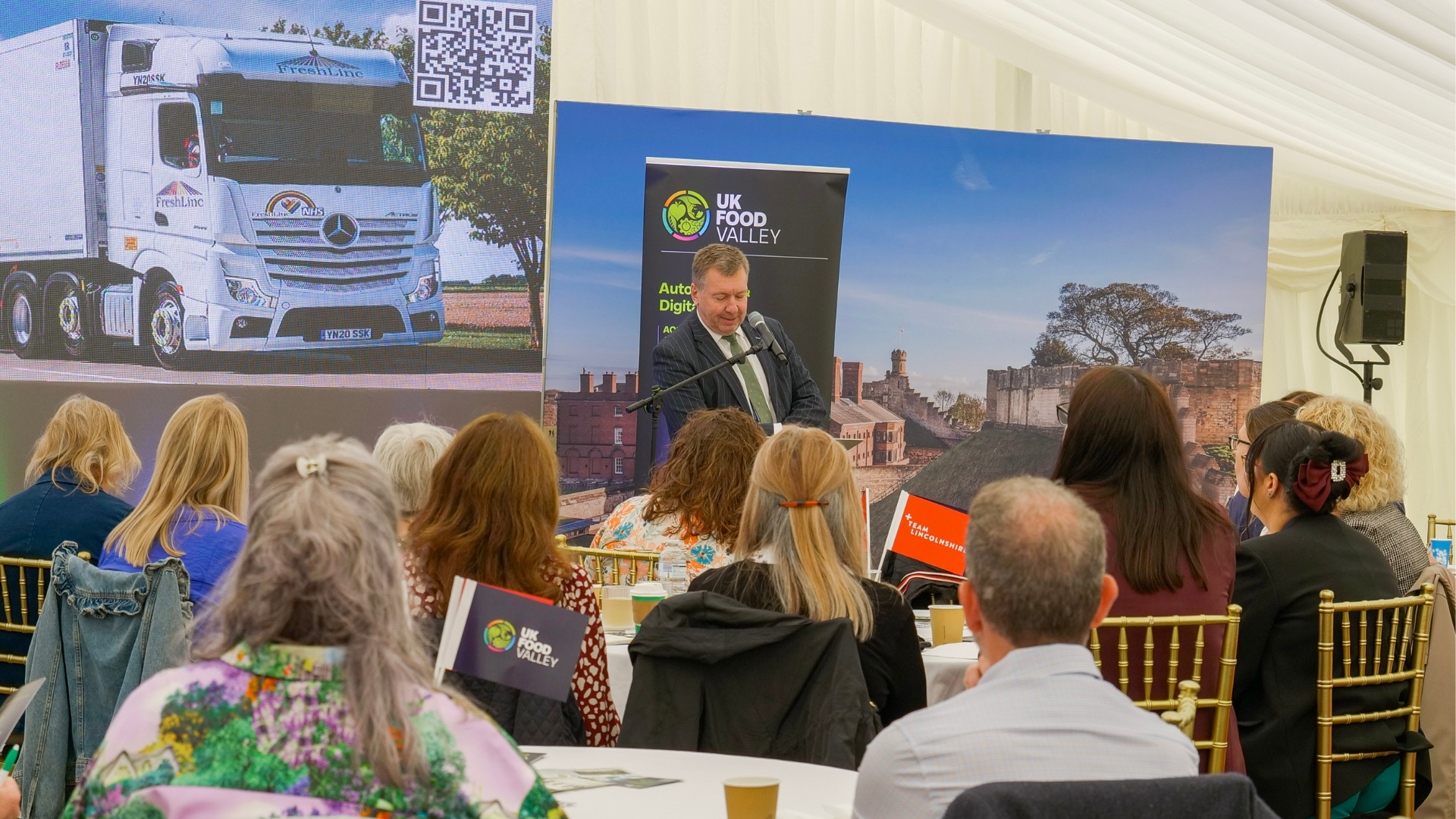
Celebration event demonstrates Lincolnshire’s leadership in food, farming and innovation.
Food industry leaders, innovators and policymakers came together at this year's Lincolnshire Show to showcase the scale, ambition and innovation driving UK Food Valley's vision to become a Top 10 Global Food Cluster.
Hosted by Amy Conyard, Co-founder of Giraffe Distillers and a member of the UK Food Valley Advisory Panel, the annual UK Food Valley Brunch brought together representatives from Greater Lincolnshire's seafood, fresh produce and food processing sectors to share insights into the opportunities and challenges shaping the future of food production.
Opening the event, Cllr Sean Matthews, Leader of Lincolnshire County Council, highlighted the vital role food production plays in both the regional and national economy, and the growing importance of food security, saying: “With various events internationally impacting food production and prices, our nation’s food security is more important than ever.
“Our area has an abundance of innovative businesses across the agri-food supply chain, and that puts our UK Food Valley team in a great position to work with local businesses to influence and shape national policy and attract investment that can unlock more opportunities for our region to drive towards stronger food security.”
The event provided an opportunity to celebrate the progress made by UK Food Valley over the past year, as the programme continues to strengthen Greater Lincolnshire's reputation as one of the UK's most significant centres for food production, processing and innovation.
Greater Lincolnshire's agri-food sector generates £15bn in annual sales, contributes £5bn in economic value and supports more than 75,000 jobs. The region is home to the UK's largest fresh produce sector, largest seafood processing cluster and one of the country's most important food processing and logistics networks, with around 30% of the nation's food moving through the area.
Reflecting on the momentum behind the programme, Amy Conyard said, "The UK Food Valley has enjoyed a strong year of promotions, endorsements and positioning towards securing a Top 10 Global Food Cluster."
She also highlighted the importance of investing in future skills, innovation and workforce development to ensure the sector can continue to grow and thrive, saying: “The UK Food Valley is home to a large, skilled, and cost-competitive agrifood workforce, enabling faster project delivery and improved productivity for businesses.
“Together we are transforming our sector by focusing on automation and high-level technical skills to boost productivity, whilst also addressing outdated career perceptions so that our young people and career changers are aware of the industry’s fantastic career paths”.
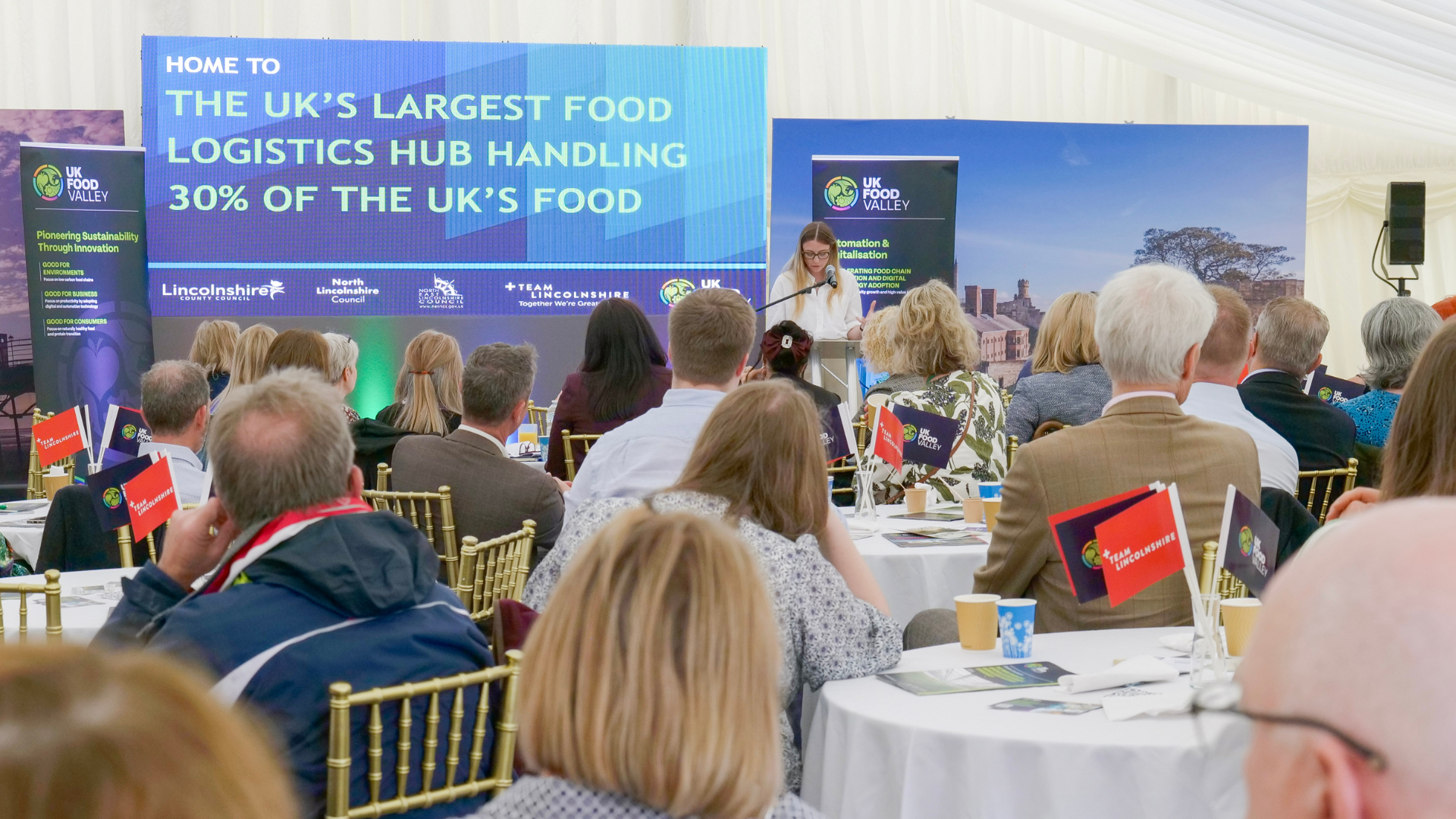
The morning's speakers demonstrated how innovation is taking shape across every part of the food chain.
Representing the Seafood Cluster, Matthew Clarke, Founder of Aquacultured, shared plans for a £245m land-based salmon farming facility in Grimsby, a pioneering project that will use advanced water treatment systems and artificial intelligence to strengthen domestic seafood production while creating new jobs and investment opportunities for the region.
Representing the Fresh Produce Cluster, David Hoyles, CEO of English Olive Co, spoke about the UK's first commercial olive grove and the world's most northerly commercial olive plantation. His story highlighted the role of diversification, entrepreneurship and long-term thinking in helping farming businesses adapt to changing market and environmental conditions.
Meanwhile, Ian Dunk, Finance & Operations Director at Worldwide Fruit and representative of the Food Processing Cluster, shared how investment in automation, artificial intelligence and supply chain innovation is helping modern food businesses improve productivity, sustainability and resilience.
While the speakers represented different sectors, common themes emerged throughout the morning. Innovation, skills, sustainability, water management and collaboration were all identified as critical to the future success of the food industry.
The event also reinforced one of the core principles behind UK Food Valley: that the region's strength lies in the connections between businesses, researchers, educators and policymakers working together to drive growth and innovation.
As UK Food Valley continues to attract investment, support innovation and champion the region's food sector on the national stage, the message from this year's brunch was clear: Greater Lincolnshire is shaping the future of food.