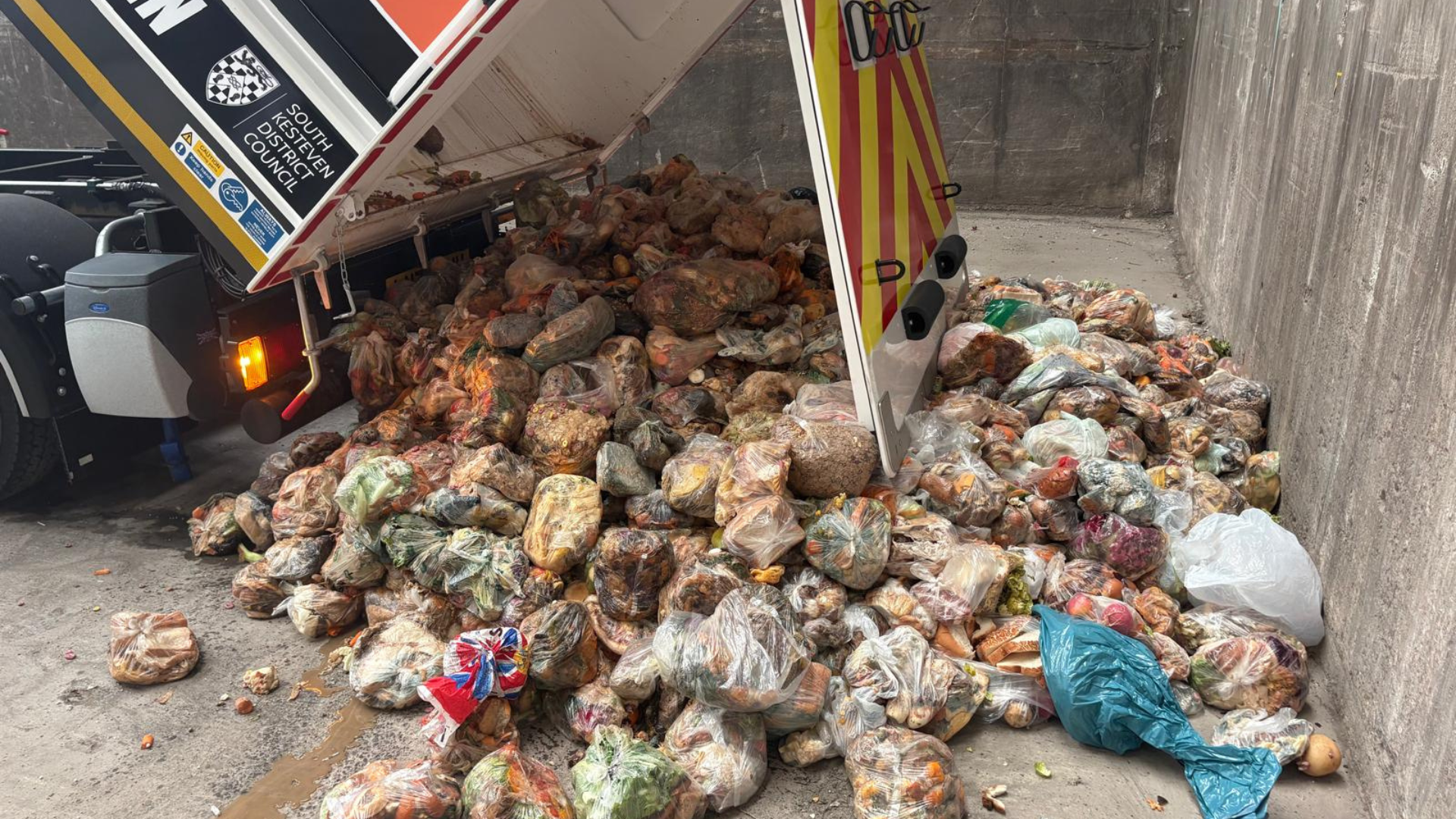
Three months after the introduction of weekly food waste collections across parts of Lincolnshire, thousands of households are now recycling their food waste every week.
helping to generate renewable energy and fertiliser while reducing the amount of waste sent for disposal.
Since the service launched, residents have recycled more than 3440 tonnes of food waste, with collections now averaging around 275 tonnes each week. Around 60% of households are presenting their food waste caddy for collection each week, with even higher volumes collected following bank holiday weekends.
Feedback from residents has been overwhelmingly positive. Around 83% of residents told us they are satisfied or very satisfied with the new service, while 93% said their food waste caddy has been collected as expected. Residents are also feeling confident about using the service, with 97% saying they are confident or fairly confident about what can go into their food waste caddy.
Councillor Danny Brookes, Executive Member for Environment at Lincolnshire County Council, said: "We're pleased with how residents have embraced food waste recycling over the last three months. These results show that people understand the benefits of the service and are making it part of their weekly routine.
"Every food caddy presented helps us recycle valuable resources that would otherwise be thrown away. Thank you to everyone who has supported the service so far."
As we've continued to introduce the service, residents have shared valuable feedback and asked a number of questions. Here are some of the most common.
"I don't put my caddy out every week."
Even if your caddy isn't full, we encourage you to present it every week alongside your other scheduled collections. Weekly collections help remove food waste from your home quickly, reducing the chance of unpleasant smells while ensuring it can be turned into renewable energy and fertiliser as soon as possible.
"Why weren't biodegradable or compostable liners provided?"
At the anaerobic digestion facility, all liners are removed before the food waste is processed. Compostable liners therefore provide no benefit to the recycling process and are often more expensive than standard liners. Residents can continue using the liners supplied or reuse suitable household bags if they wish.
"My caddy was missed."
We apologise to the small number of households that experienced missed collections as the service was introduced. As with any new collection service, there was a short settling-in period while crews became familiar with new routes and presentation arrangements. Missed collections have reduced significantly as the service has become established. If your caddy is ever missed, please report it through your local council's website.
"The caddies can blow over in windy weather."
Because the outdoor caddies are smaller and lighter than wheeled bins, they can sometimes be affected by strong winds once emptied. Our collection crews will continue to place caddies where practical to help reduce this wherever possible.
"What happens to my food waste?"
Food waste collected across Lincolnshire is taken to an anaerobic digestion facility, where it is transformed into renewable biogas and nutrient-rich fertiliser for local farmland. This allows valuable resources to be recovered and put to good use.
A small reminder
To help collection crews spot your food waste caddy easily, especially when it is presented alongside your wheeled bins, please place it somewhere clearly visible at the edge of your property on collection day. Avoid positioning it behind or between larger bins where it may be difficult to see.
If you're ever unsure about what can go into your food waste caddy, you can check the information leaflet that was delivered with your caddy or visit your local council's website. For unusual items, our teams are always happy to help.
Phil Roche - Commercial Director, BioteCH4, said “We're delighted with how smoothly the rollout and implementation of food waste collections has progressed. This success is a testament to the strength of our partnership with Lincolnshire County Council, whose commitment and hard work have been instrumental in mobilising this new service.
“Lincolnshire’s Waste Team have done a fantastic job of mobilising this new service across such a huge county. Together we have laid the foundation of a strong, long-term relationship that not only creates lasting environmental benefits but also benefits residents and the wider community.”
For everything you need to know about Lincolnshire's food waste recycling service, including what can go in your food waste caddy and answers to frequently asked questions, visit www.lincolnshire.gov.uk/foodwaste.
You can also watch a short video explaining what happens to your food waste after it is collected, from collection through to being transformed into renewable energy and fertiliser. If you've heard any of the common myths about food waste recycling, our Rubbish Rumours video series separates fact from fiction and answers some of the questions residents ask most often.
Thank you to everyone who has supported the new service so far. Together, we're making a real difference by recycling more, generating renewable energy and fertiliser, and making the most of Lincolnshire's food waste.