
Life in the green lane, next to the fast lane
Lincolnshire has more roadside verge than almost anywhere else in the country. With more than 5,500 miles of road network to look after, the county’s verges add up to 36,000 miles of green space running through farmland, villages and market towns.
These strips of grass might pretty look ordinary as you drive past them, but the reality is that they’re home to a surprising amount of wildlife. Wildflowers, insects, small mammals, birds hunting along the edges. It’s all there, quietly getting on with things.
And our local picture fits into a much bigger one. National research shows that nearly half of the UK’s wildflower species grow on road verges, which is around 720 different kinds of flowers.
Across Britain, verges stretch for roughly 300,000 miles and cover more than 200,000 hectares of land. Given that The Natural History Museum says the UK has lost 97 per cent of its meadows since the 1930s - verges have become ever more important, literally now being one of the last reliable places for wildflowers to thrive.
And Lincolnshire’s network of rural roads means the county plays a bigger role in that than most.
Cllr Danny Brookes, executive member for the Environment at LCC is all about making sure that we do what we can with these valuable spaces so that wildlife gets the hand up. He said: “People often don’t realise how important these verges are for wildlife. Once you look at the numbers, it’s hard not to see the value.
“Leaving these areas of the roadside to grow is something that I think most people can agree on and helping wildlife where we can is a simple idea that makes sense. Good grass cutting with the right protocols of what to cut, and what not to, is part of that balance so we make sure we carry out the right cut in the right place, at the right time.
“By doing that, nature gets space to grow and everyone else gets the visibility they need.”
Working with Lincolnshire Wildlife Trust, we’ve identified 65 Roadside Nature Reserves and 159 new Local Wildlife Sites across the county. These are the places where careful timing and thoughtful cutting make the biggest difference. They form a network of wildflower‑rich habitat running through Lincolnshire’s highways, and each one is managed so nature gets the best chance to flourish.
And that leads us into the rest of the job. Looking after wildlife doesn’t mean leaving everything to grow wild. It means knowing exactly how to cut so that safety, access and nature all get what they need. Every year we cut around 36,000 miles of grass, and it takes about 20,625 hours to get through it all. Most people don’t notice it happening until a bout of hayfever starts.
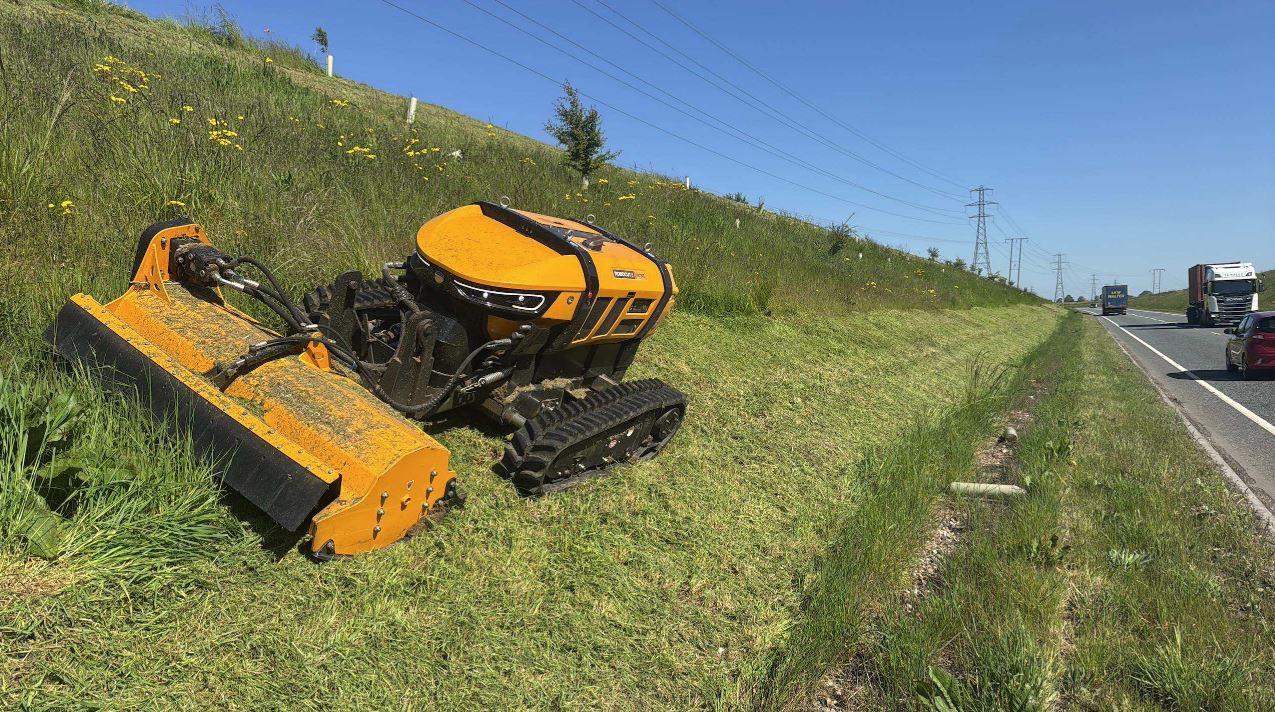
Let’s be honest, grass cutting might not be the most news-worthy thing in a world of potholes, road closures and huge infrastructure projects, but it’s a vital part of what we do. Ok, so a cool robot mower keeping banked areas next to the Lincoln bypass is actually pretty cool, but you don’t often see that elsewhere in the county.
Robots aside, you might think it’s simple. Get a mower, turn up where the grass is tall and cut it. And yes, sometimes it is that simple, but doing it at county scale takes planning.
We carry out three cuts a year to keep things under control. They start around April and run through to September. Rural verges are cut to a width of one metre either side of the road and footpath. At junctions and some bends, we cut right up to the road edge to keep sightlines clear.
As the Highway Authority, we have a duty to make sure visibility is safe. That includes cutting back anything that blocks a driver’s view. We also cut a 1.1 metre strip along rural roads where there are no footways, giving pedestrians and other vulnerable road users a safer space.
When you’re looking after nearly 70,000 tennis courts’ worth of grass each season, you can see why we take the job seriously.
Who cuts what and where?
We can’t physically cut every verge ourselves. There aren’t enough staff to cover all 36,000 miles, so around 74 per cent of the work is carried out by more than 100 Parish and District Councils. This happens under the Parish Agreement process launched in 2017. It’s why, if you report an overgrown verge on FixMyStreet, it might be a local council that picks it up.
In urban areas, many residents, farmers and local businesses also cut the verges next to their land.
It’s a wildlife thing
Every time we cut a verge, we think about wildlife. Verge management is a chance to support biodiversity. We know when and where to make the most nature‑friendly cuts because we’ve worked with Lincolnshire Wildlife Trust to understand where we can make a positive difference.
This has led to the introduction of 65 Roadside Nature Reserves and 159 new Local Wildlife Sites. These are the stretches of verge most important for nature conservation. They form a network of wildflower‑rich habitat within our highway verges. More information on their management is available on the Lincolnshire Wildlife Trust website.
Tell us
If you spot a verge that needs attention, you can let us know through the FixMyStreet app. You’ll get feedback about what’s happening and who’s dealing with it.
By the numbers
- 18 – flail mowers used for rural cutting
- 6 – ride‑on flail mowers for urban work
- 4 – strimming teams across the county
- 2250 – hours worked per cycle in urban areas
- 4625 – hours worked per cycle in rural areas
- 20,625 – total hours for the three yearly cut cycles
- 12,000 – miles of highway verges cut at least three times a year
- 74% – proportion of urban verges cut by Parish and District Councils