
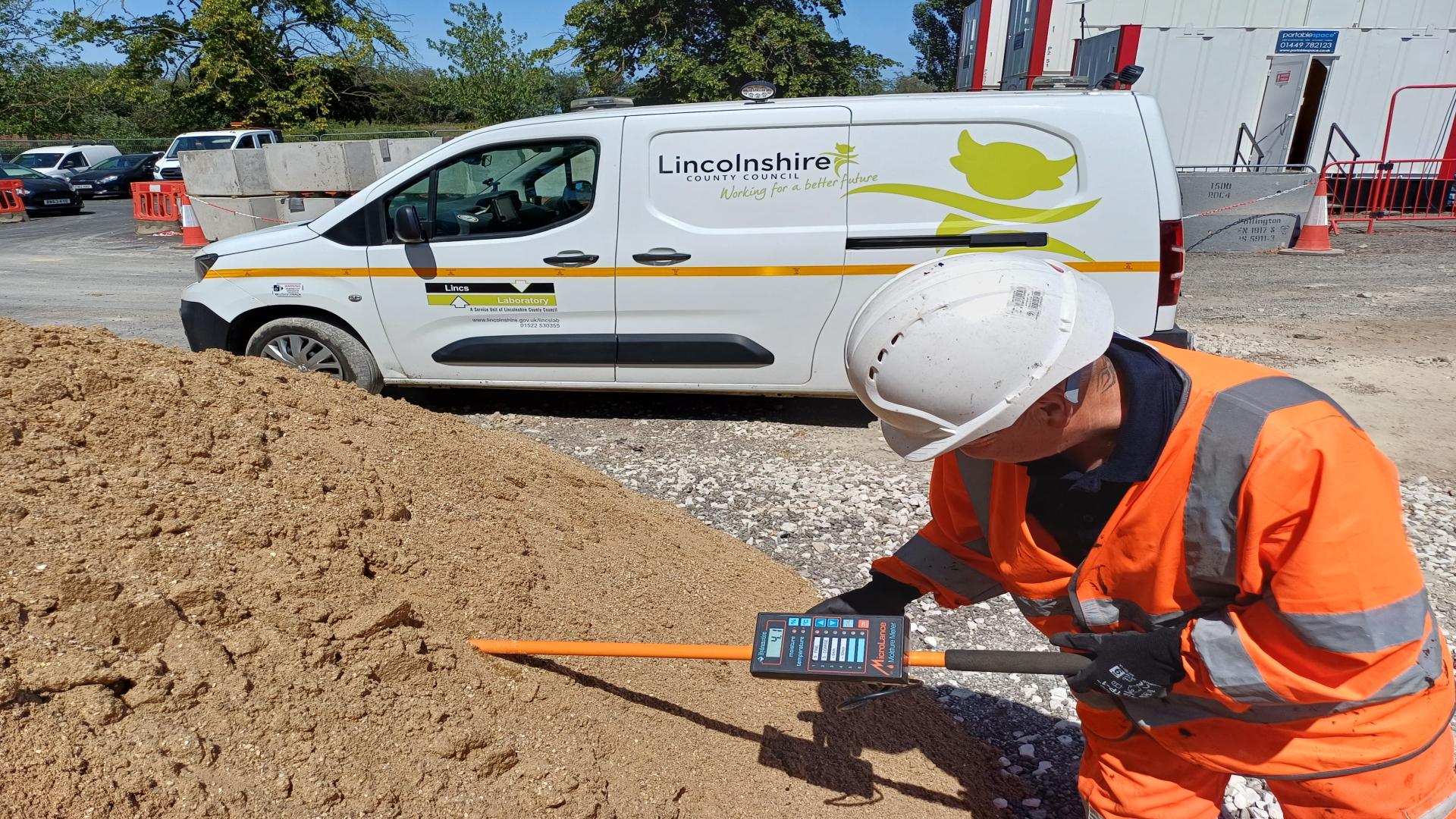
Safer roads, smoother journeys and better value for taxpayers are being supported by a specialist team working behind the scenes.
Lincs Laboratory is one of only around ten remaining county council-run highways laboratories in the country. It provides specialist testing, engineering and survey services that support the design, construction and maintenance of roads across Lincolnshire – helping ensure public money is spent in the right place at the right time, and that contractors deliver what taxpayers are paying for.
The information gathered by the laboratory helps the council take a proactive approach to managing its 5,500-mile road network, supporting smarter long-term planning and helping maximise the impact of highways investment so more of the network can benefit over time.
Cllr David East, executive member for highways, said: “Lincs Laboratory plays a vital role in helping us maintain a safe, reliable and resilient road network for residents, businesses, emergency services and everyone travelling around Lincolnshire.
“Their specialist testing, inspections and surveys help us make smarter, evidence-based decisions about where investment is needed most. By understanding the condition of our roads in detail, we're able to target funding more effectively, reduce wasted spending and ensure we get the maximum benefit from every pound invested into our 5,500-mile highways network.
“This isn't just about engineering and testing. It's about delivering safer roads, smoother journeys and less disruption for residents. The work carried out by the team helps roads last longer, reduces the need for repeat repairs and supports a more proactive approach to maintenance.
“In many ways, it's similar to servicing a vehicle before a major breakdown happens. By identifying issues early, we can intervene before they develop into larger, more disruptive and more expensive problems that affect people’s day-to-day journeys.
“I’m incredibly proud that Lincolnshire still has this expertise in-house. Having our own laboratory gives us direct oversight of quality, performance and accountability across our highways programme. This helps ensure residents receive better long-term value for money and a road network that remains fit for the future.”
What happens at the lab
The work Lincs Laboratory carries out is split across several specialist teams. Site technicians travel across the county to test materials directly on construction sites or collect samples for further analysis. This includes taking core samples from roads, testing ground conditions and checking surface quality and skid resistance to ensure it meets the county council’s stringent requirements.
At the lab, teams carry out detailed testing on materials such as soils, aggregates, concrete and asphalt. These tests ensure materials meet strict performance standards, from measuring strength and durability to confirming the correct composition and grading.
The service also carries out a wide range of surveys, including road condition inspections and traffic monitoring. This information helps the council understand how the network is performing, identify emerging issues early and prioritise investment in the areas that will deliver the greatest benefit to residents and road users.
Sam Edwards, head of highways and economic infrastructure for the county council, said: “Lincs Laboratory supports every stage of highway projects across Lincolnshire, from initial investigations and design work through to construction testing and final quality checks.
“In addition to on-site inspections and in-lab testing, our engineering team provides specialist advice and support for major infrastructure projects, helping ensure schemes are designed using robust evidence and a clear understanding of local conditions.
“The lab also plays an important role in independently checking the quality of works carried out by contractors on behalf of the county council. By scrutinising materials, workmanship and compliance with specifications, we're able to hold contractors accountable and ensure the work residents are paying for meets the standards we expect.
“If issues are identified, contractors are required to rectify them at their own cost. This protects taxpayers from poor-quality work, reduces the likelihood of repeat maintenance and helps ensure our roads provide lasting value.
“Having this expertise in-house also allows us to respond quickly, maintain strong quality control and apply detailed local knowledge of Lincolnshire’s network when supporting projects and maintenance programmes.
“Ultimately, everything we do is focused on achieving practical outcomes for people. Better testing, better evidence and better decisions help create safer roads, more reliable journeys, reduced disruption and a network that can continue supporting communities, businesses and economic growth across Lincolnshire.”
Cllr East added: “Having this level of expertise within the council is incredibly valuable. It means we can closely monitor the quality of works on our roads, support innovation, hold contractors to account and ensure our investment delivers the greatest possible benefit for residents over the long term.”
From advanced testing equipment to specialist survey vehicles, Lincs Laboratory combines traditional engineering expertise with modern technology to deliver reliable results. This includes equipment capable of measuring the strength of asphalt under controlled conditions, as well as machinery that assesses how road surfaces respond under load to identify underlying structural issues before they become more serious.
The Lincs Laboratory team is made up of 37 permanent staff and a pool of relief surveyors who work both on-site and in the laboratory to test materials, assess road conditions and gather vital data used to inform future investment decisions and maintenance priorities across the county’s highway network.
The laboratory is accredited to nationally recognised standards for quality and safety, ensuring all testing and processes meet rigorous industry requirements.
For more information about Lincs Lab, visit www.lincolnshire.gov.uk/lincslab.