
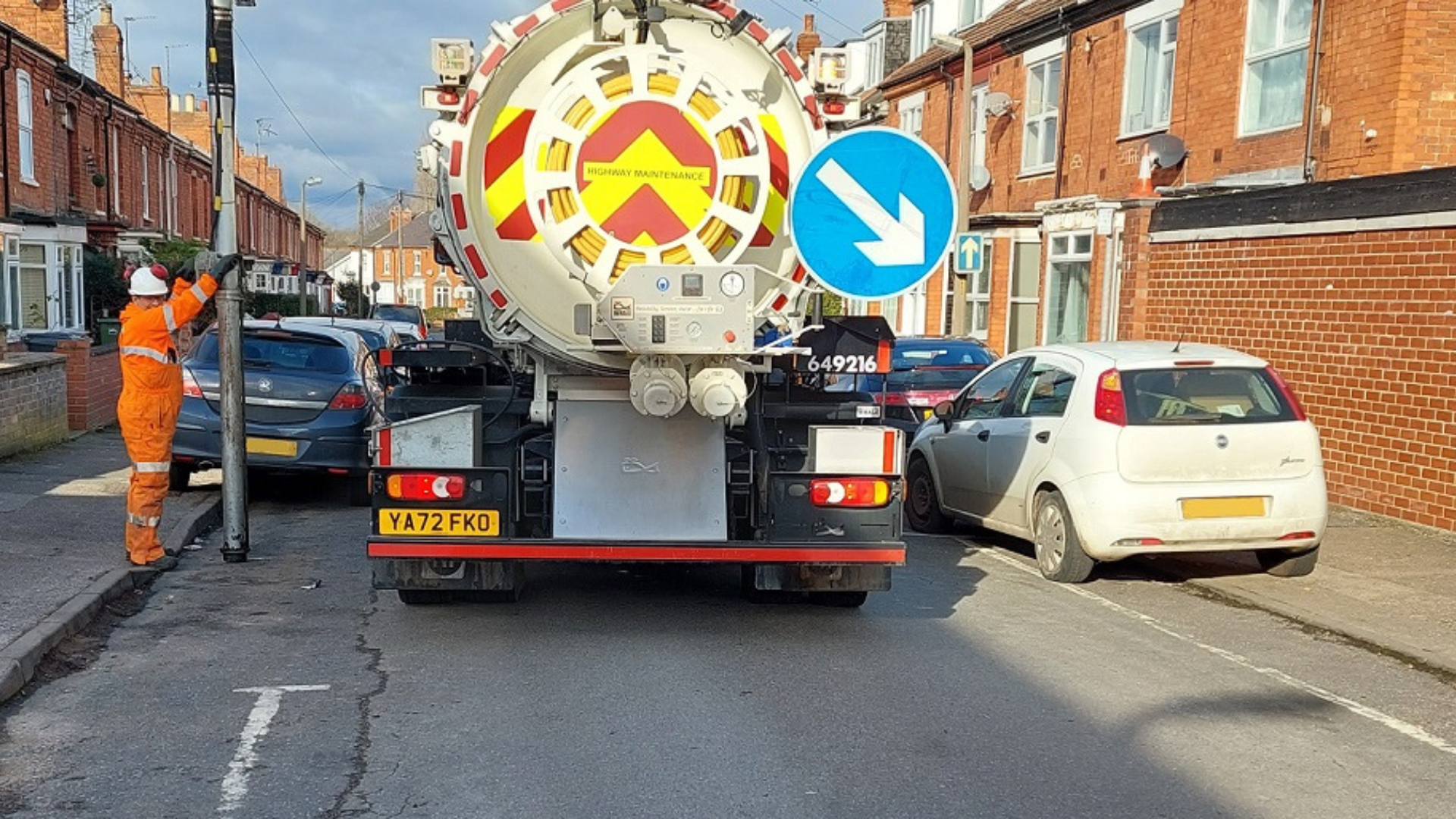
And to do it, we need to make sure we can get the big tanker to where it needs to be – so move your car!
Blocked drains do not become a problem overnight. Leaves, mud, grit and other debris build up gradually throughout the year, reducing the ability of gullies and drainage systems to carry water away when they are needed most.
That is why Lincolnshire County Council is continuing its programme of drain and gully cleaning across the county. It is essential maintenance work that helps keep roads draining properly, reduces the risk of standing water and surface water flooding, and allows highways teams to identify any issues before they become more serious.
Drainage assets are inspected and maintained on regular cycles depending on location and need. Removing accumulated debris helps keep water moving through the network and ensures drains are able to perform effectively during periods of wet weather.
But there is one common problem that regularly prevents this work from being completed properly and that is parked vehicles.
Drain-cleaning tankers are sizeable vehicles with some heft behind them. They need direct access to gullies AND enough room to travel safely along the street. When vehicles are left parked up (especially in residential streets), crews are often unable to reach every drain, meaning sections of the network can be left untreated.
To help avoid this parked-up problem persevering, LCC is once again asking residents to move their vehicles on the days that essential drain clearance work is scheduled to take place. Temporary parking restrictions will be in operation to ensure crews can complete the programme safely and efficiently.
So be aware that IF vehicles are NOT moved then they could be removed from the work area so that the drainage works can go ahead. Remember, work area usually means residential street and removed means being lifted away on the back of a lorry.
So, here's how the process for drainage works work. Residents and businesses will receive advance notice before work starts. Information will be displayed on-site and temporary traffic management measures will be put in place on the scheduled dates.
On the day of the works, parking will not be permitted within the signed areas. Access to properties will be maintained wherever possible, but vehicles must not be left on affected streets.
Here's the latest programme dates for drain cleaning:
Wednesday 7 October
Gainsborough
- Balfour Street
- Birrell Street
- Burns Street
- Fawcett Street
- Forster Street
- Lincoln Street
- Bayard Street
- Curzon Street
- Melrose Road
- Nelson Street
Thursday 8 October
Gainsborough
- Saracen Close
- Garfield Street
- Charles Street
- Tennyson Street
- Tennyson Avenue to Car Park
- Arthur Road
- Grey Street
- George Street
- Albany Street
- Arkwright Street
Boston
- Hartley Street
- Norfolk Place
- Orchard Street
Wrangle
- Church Close
Friday 9 October
Gainsborough
- Tennyson Avenue to Car Park
- Beaufort Street
- Clinton Terrace
- Edward Road
- Henley Court
- Hotspur Road
- Lewis Street
- Mowbray Street
- Sainsburys Street
- Woods Terrace
It’s worth knowing that In addition to the drainage programme, other highways teams may also make use of the clear streets to carry out maintenance work where appropriate, including repairs to the road surface. Coordinating activities in this way helps reduce future disruption and allows several improvements to be completed during a single road occupation.
Cllr David East, Executive Member for Highways and Transport at Lincolnshire County Council, said: "Most people probably don't give much thought to roadside drains until they stop working properly, but keeping them clear is an important part of looking after the highway network.
"Over time, gullies naturally fill up with mud, leaves and other debris. If we don't remove that material, water has nowhere to go when heavy rain arrives, which can lead to standing water and local flooding issues.
"The challenge we often face is access. Our crews can only clean a drain if they can get to it, and unfortunately parked vehicles can sometimes prevent that from happening. Even one vehicle left in the wrong place can mean an entire section of road can't be completed.
"We're simply asking people to check the signs, look out for the advance notices and move their vehicles on the day we're due to attend. It helps the teams get the work done first time and means we can cover far more ground.
"Nobody wants to see vehicles removed and that will always be a last resort, but these are essential works and we do need to make sure the crews can reach every drain on the programme. We'd like to thank residents in advance for their patience, understanding and support while the work is taking place."