
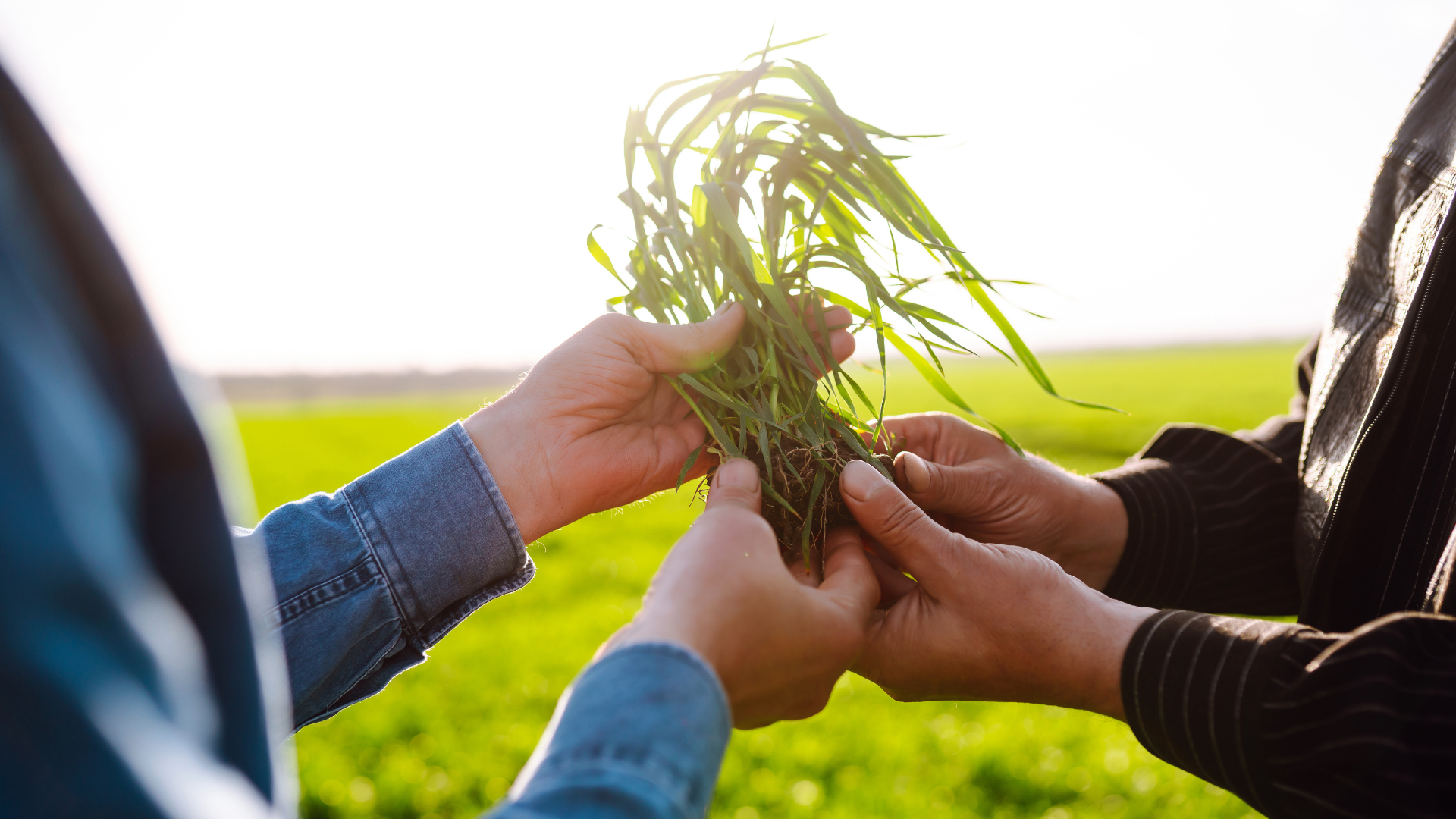
Farmers call for greater confidence and support as environmental markets continue to develop.
The Greater Lincolnshire Forum for Agriculture and Horticulture (GLFFAH) has warned that private environmental markets should not be seen as a quick replacement for public support when taking on long-term environmental projects.
Environmental markets allow farmers and landowners to earn money by delivering benefits like improved wildlife habitats, carbon storage, and reduced nutrient runoff. Organisations can then pay for those outcomes to offset their own emissions with carbon credits.
The county's farming and food leaders recognise the opportunities these markets could bring but say that it is still a developing area and too inconsistent to give agri-businesses confidence to invest.
Matt Riddington, Chair of the Greater Lincolnshire Forum for Agriculture and Horticulture, said: “Profitability remains key in the sector and many growers already operate on very tight margins.
“Private environmental markets do offer real opportunity for businesses to diversify in environmentally friendly ways, but it is still early days, and the private sector can’t provide a complete replacement for public support in this way just yet.
“If agri-businesses are expected to meet the increasingly tighter environmental rules and requirements we are seeing, they need clear, practical, advice-led regulation and incentives from Government.
“We need to be serious about national food security, sustainability and long-term resilience, and a big part of that is ensuring our farms remain profitable. We can’t expect farmers to keep taking on additional requirements at a loss. We need that confidence that these schemes will make a difference environmentally and return their investments.”
Members also argued that asking farmers to do more for the environment is only sustainable if they are competing on a level playing field.
They proudly highlighted how animal welfare standards, food safety, and environmental protections on British farms are among the highest in the world. Imported food is often not produced to these standards but can still be sold in the UK, often for cheaper thanks to lower operating costs that tend to come with lower standards.
It puts British farmers at a disadvantage for producing food to high standards, and the GLFFAH agreed that imported products should be expected to meet equivalent standards wherever possible to ensure we’re supporting, not penalising, our high-quality homegrown produce.
Matt added: “Fair rules on imports are only part of the picture. UK farmers producing to some of the highest standards in the world also need Government support to open up viable export markets, with access to overseas buyers willing to pay for that quality. Our high standards could become a commercial advantage, rather than simply a cost, with the right support.”
The conversations form part of work from the GLFFAH to gather evidence from Lincolnshire’s farmers and growers on the challenges affecting growth, investment and sustainability.
This is being collated and shared with decision-makers at a local and national level to help shape future agricultural policies.
For more about the forum and its work, sign up to the quarterly GLFFAH newsletter.