
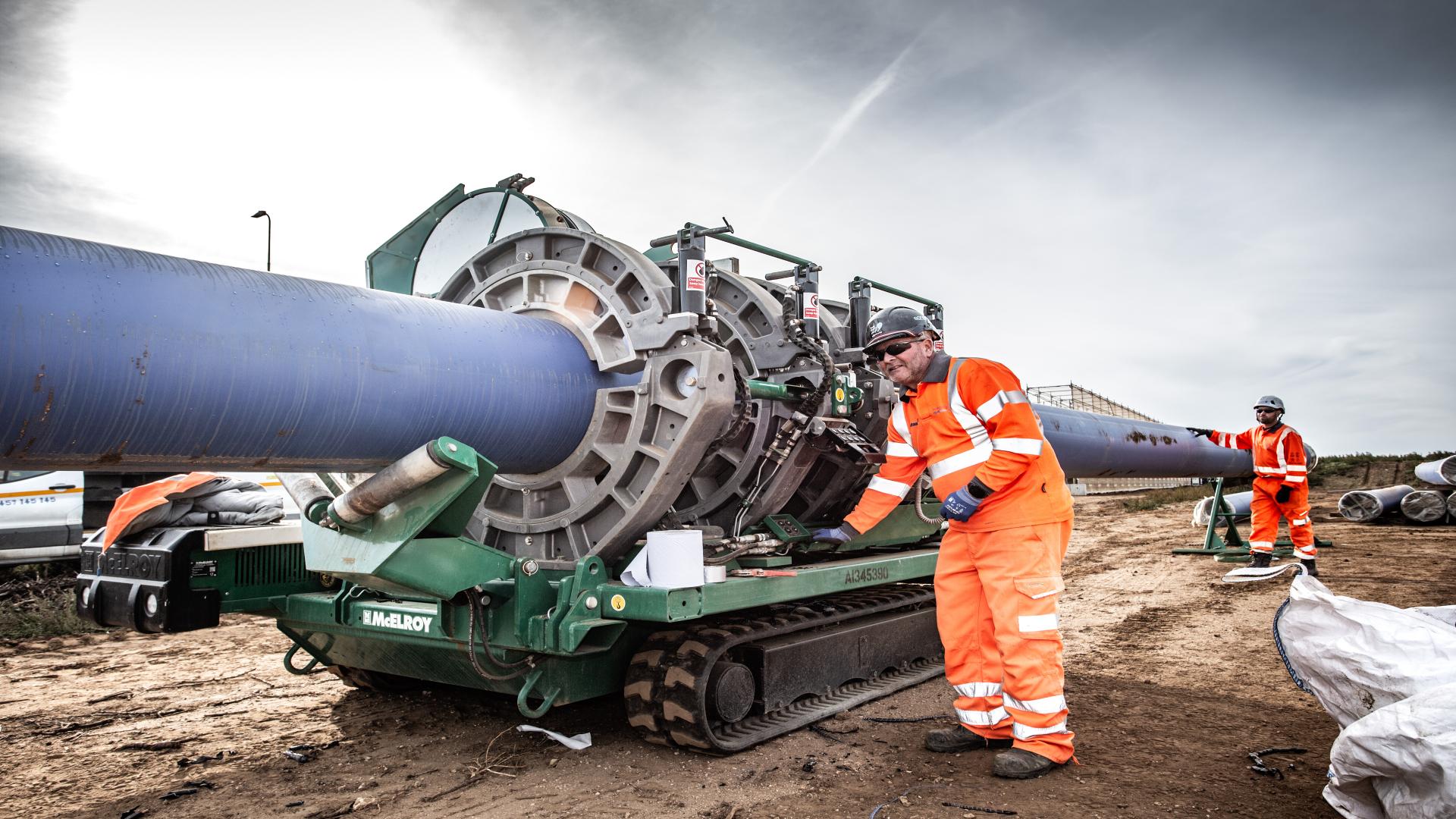
More than six miles of drainage pipes, 10 settlement ponds and almost 22 miles of drains and ditches will help manage water safely through Lincolnshire’s biggest infrastructure project.
Have you ever wondered where all the rainwater goes when it falls on a new road?
During heavy rainfall, the North Hykeham Relief Road will need to manage roughly 600 million litres of water annually (based on average annual rainfall over the past ten years) – equivalent to around 240 Olympic-sized swimming pools.
Making sure that water is managed safely is a vital part of building a new road. While laying the tarmac is the most visible stage of construction, a huge amount of supporting infrastructure must also be put in place beneath and alongside the finished route.
That includes drainage systems designed to collect surface water, manage the flow into existing drainage networks and help protect the new road and surrounding environment.
Cllr David East, executive member for highways at Lincolnshire County Council, said: “Drainage is a vital part of building a new road, but it’s something most people will never see once the project is complete.
“We’re investing in a drainage system designed to manage water safely through the scheme for many years to come, helping protect the new road, the surrounding environment and the existing drainage networks.
“This is another example of the careful planning that goes into a project of this scale. We’re not just building a new road – we’re putting the infrastructure in place to make sure it works properly and delivers long-term value for taxpayers and communities.”
Managing surface water
As part of the relief road project, the team will be installing a massive six-miles of drainage pipes, alongside 127 new manholes and other associated drainage structures. The purpose of these is to capture and control surface water across the scheme before it is released into existing local drainage networks.
Ten settlement ponds are also being built along the route – nine of them located between the A46 and Station Road, with a further pond at the eastern end of the scheme near the A15.
These will provide time for silt and sediment carried by surface water to settle before water is released into existing drainage ditches. Flow control devices at each pond will also regulate the amount of water entering the local ditch network, along with systems to control pollution before the water is discharged into local and Internal Drainage Board (IDB) watercourses.
The drainage system is supported by 11 miles of narrow filter drain and ten miles of permanent pre-earthworks ditches, which will capture water passing through the road construction.
Sam Edwards, head of highways infrastructure for Lincolnshire County Council, Lincolnshire County Council, said: “The drainage system has been designed to manage water at a number of stages, from capturing it through the road construction to controlling how it is eventually released into existing drainage networks.
“The settlement ponds give water time to slow down and allow sediment to settle, while flow controls and vortex separators provide additional control over the quality and quantity of water leaving the scheme.
“We’re also putting extensive temporary measures in place during construction, because managing water and sediment properly is just as important while the road is being built as it will be once it is complete.”
Managing water during construction
Drainage work is already progressing in stages across the project. Ahead of the winter months, temporary closures of Brant Road and Station Road provided Balfour Beatty with the safe working space needed to create a new drainage route through the scheme.
This will help water flow safely from the east, including the Lincoln Cliff, through the relief road site and towards the west and the River Witham.
During construction, more than a quarter of a mile of temporary carrier pipes and temporary ditches will help manage surface water. Around 1,000 metres of silt fencing and flocculant matting will also be used to help control sediment collected in drainage pipes and ditches.
These temporary measures help manage water and sediment before the permanent systems are fully in place, supporting responsible construction and helping protect the surrounding area as work progresses.
Rob Lockwood, Project Director at Balfour Beatty said: “Delivering drainage infrastructure on this scale is a complex engineering challenge, with both temporary and permanent systems playing a critical role throughout construction.
"By carefully managing water and sediment as works progress, our teams are helping to protect the surrounding environment while laying the foundations for the long-term resilience of the new road.”
The North Hykeham Relief Road’s drainage and utility systems have been developed in close collaboration with Anglian Water and other relevant organisations, ensuring the work meets the necessary design, planning and environmental requirements. This joined-up approach helps make sure the new infrastructure works effectively with existing local networks, both during construction and once the road is open.
Once complete, the drainage infrastructure will form an important part of the new relief road, helping manage rainfall and surface water while protecting the road and surrounding network for the future.
£110 million was allocated towards the relief road in November 2020 from the Department for Transport's 'Large Local Majors' programme.
The project is being carried out by Balfour Beatty.
For more information about the North Hykeham Relief Road, visit www.lincolnshire.gov.uk/nhrr.