
The world of work is changing as never before - and the key to it is skills.
Here in Greater Lincolnshire - the historic county from the Humber to the Wash - we’re best known for food manufacturing and being the nation’s biggest arable and horticulture producer.
The area grows 25% of the UK’s vegetables, processes 70% of its seafood, and supplies a whole range of food found in your local supermarket. But there’s far more to Greater Lincolnshire than that.
It also:
- Has a manufacturing sector worth over £3bn
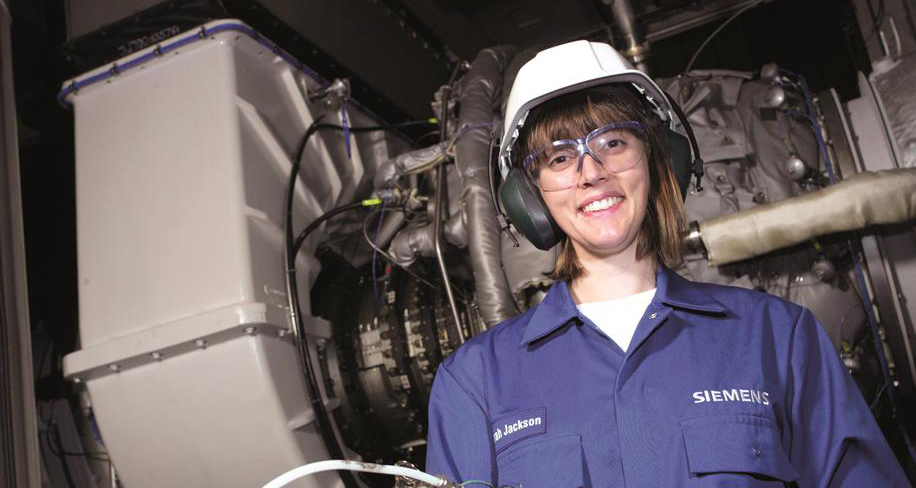
- Boasts the UK’s biggest Siemens plant
- Is home to more than 120 sites of special scientific interest
- Attracts over 34m visitors a year, with many flocking to our great coastline
- Has an international airport and the largest UK port by tonnage
With so much to offer, Greater Lincolnshire has fantastic career opportunities for people of all ages. And - contrary to popular myth - these aren’t just low-skilled jobs.
Across the county, there’s growing demand for greater skills than many residents currently have in lots of different industries.
The challenge is to ensure we can fill the 200,000 local job vacancies that forecasts say will be available over the next decade.
To make the most of these opportunities, work is underway to equip residents of all ages - particularly young people - with the skills of the future.
For more information about the Greater Lincolnshire economy, visit www.greaterlincolnshirelep.co.uk
Linking business and schools
Most of the funding for education, skills and training is managed nationally, but there are important things happening locally.
As part of the Local Enterprise Partnership (LEP), the council is helping young people increase their understanding and experience of work. Over the next few months, newly appointed enterprise co-ordinators will be creating more links between secondary schools and businesses.
They will also be working with others to help schools and employers work in local clusters. The LEP is looking for business leaders to volunteer with school senior management teams. The aim is to help schools see careers from a business perspective, and to bring in other entrepreneurs to support pupils from year 7 upwards.
The local labour market information website www.theworldofwork.co.uk will also continue to be developed. In particular, businesses will highlight the kinds of jobs and careers they can offer, so young people can learn about exciting opportunities on
their doorstep.
A career with the council
The council isn’t just encouraging businesses to make a difference - it’s taking on more and more apprentices itself. That’s good for young people, who get a head start on their career without the time and expense of going to university.
It also allows the council to shape the skilled workforce it needs for the future, with 167 employees now undertaking pprenticeship learning.
More broadly, the Apprenticeship Levy - introduced by the Government in 2017 - provides funding for learning for all ages and levels of experience.
Many professional bodies now make their qualifications available via this route, including those for social workers and teachers.
Apprenticeship opportunities at the council can be found at https://jobs.lincolnshire.gov.uk/jobs
You can also find vacancies in your area using the Government’s apprenticeship finder https://www.findapprenticeship.service.gov.uk/
Options and Optimism
Cllr Mrs Patricia Beadwell OBE, executive councillor for children’s services, is passionate about increasing the options available to young people.
Here, she looks at two new developments - Institutes of Technology and T-level qualifications - that will open new doors for them to the world of work:
“I was privileged to meet some young apprentices at an awards event recently, and was struck by their enthusiasm, ambition and optimism for a successful future.
 This is in direct contrast to those who leave school without the necessary skills or direction, and end up in jobs that don’t inspire them, with no chance to progress.
We must give everyone the chance to get on a clear path to meaningful work - whether that’s academic, technical, practical, or a combination of the three! With this in mind, I was delighted that the University of Lincoln has been chosen as one of 12 Institutes of Technology to be set up across the country.
The university led a collaborative bid with regional employers and further education colleges to establish an institute in Lincolnshire. It will specialise in agri-tech, food manufacturing, energy, digital and engineering across our area.
This will give young people the chance to access high-quality training, giving them skills and technical qualifications comparable to going to university. And the partnership approach won’t just help young people transform their skills and shape their careers - it will also support our local businesses to grow and succeed.
What’s more, the Lincolnshire Institute of Technology won’t be focused in one place such as Lincoln, but will use multiple sites across Greater Lincolnshire. The Government is hoping to see the first institutes opening in the autumn, and I’ll keep you posted on when the local facility is ready.
There are also plans for new T-levels to be introduced from next year, creating a technical and vocational equivalent to A-levels. The idea is to provide 25 high-quality courses, involving both classroom work and industrial placements, ensuring the skills to get and perform well in a real job.
Around 50 colleges could be offering the first three T-levels as early as 2020. These developments will give our education and training system a more flexible outlook, replacing the outdated perception of university as the only route to success. For young people and their families, this flexibility means making decisions which can be confusing, particularly when some of the options are completely new.
Traditional post-16 routes are now accompanied by a range of vocational and technical qualifications, which are well received by universities and employers alike.
If you have a child in secondary school, I’d encourage you to talk to the school about the options available, what they mean, and where you can find more information. That way, you can help your child achieve the career that’s right for them - whatever that may be.”