
Who is a young carer?
A young carer is someone under the age of 18, who is supporting a person due to illness, addiction or disability. They may be living with that person or supporting a friend or grandparent.
How many young carers are there?
There are lots of young carers. Around 1 in 12 young people is a young carer. That means 2 young carers in every class in every school. We want to make sure every young carer has the right support from the right person at the right time.
In Lincolnshire, we are aware of over 3000 young carers but know there are likely to be lots we don’t know yet.
Caring role
Young carers might be supporting someone by helping with:
- Practical tasks, like cooking, housework and shopping
- Physical care, such as helping someone out of bed
- Emotional support, including talking to someone who is distressed
- Personal care, such as helping someone dress
- Managing the family budget and collecting prescriptions
- Helping to give medicine
- Helping someone communicate
- Looking after brothers and sisters
Every caring role is likely to look and feel different for every young person, even if they are caring for the same relation with the same condition.
If you are unsure if you or your child’s help fits into any of these activities, please talk to someone who is supporting you who can help to understand what support children are providing for their loved ones.
How it might feel to be a young carer
Some young people find their caring role positive and are proud of the support they give and the life skills they are learning.
- “I like seeing him happy”
- “It makes you feel closer to the person you’re helping”
- “If we are out and she panics, I try to calm her down. I try to get her to think about other things”.
Sometimes caring might also make you feel lonely, stressed, miss school or have little time for yourself.
- “Sometimes I feel bad that my dad doesn’t really have anyone and then I feel like I need to stay and be at home”
- “I really want to have my friends over, but I can’t”
- “I’m worried about leaving mum on her own and going to school as I don’t know if she’s OK”.
Support for young carers

If you're a young carer, you're not alone. There are people who want to help you feel supported and make sure you have time for yourself, school, and friends.
Young carers have the right to be supported so those around them understand who they are caring for, what their caring role looks like, what impact this has on them and any additional support they would benefit from.
This can be explored via an Early Help Assessment, this can be completed by any professional either working with the cared for person, the parents or carers or working with the child through school or education settings.
Here in Lincolnshire, we work as a partnership to make sure whoever you feel comfortable sharing your family's information with, can explore your caring role.
Lincolnshire Young Carers provide the opportunity to join groups and participate in activities with other young carers across the county; an online community with peers and where needed one to one support from a worker with specialized knowledge of carers issues.
We work together with lots of partners across the county who also provide support and advice to young carers, this might be a group or an activity within your own school.
Ask at school about who is your Young Carer Lead, or lookout for their badge – this is the person you can talk to.
The Lincolnshire Carers Service can also provide support to young carers from the age of 16, depending on need and if you choose to access support from adult services.
Your caring role
You might feel proud of the help you give, but it can also be tiring, stressful, or isolating. You may miss out on school, time with friends, or feel overwhelmed by the responsibility.
Whether you're helping with personal care, managing medication, or just worrying about someone you love, your feelings matter.
Questions you might have:
- If I’m a young carer who can help me?
- If I ask for help, will I be taken away from my family?
- What are my rights as someone who supports my Mum/ Dad/ Brother/ Sister/ Relative?
- Why do I have to look after my mum/dad/brother/sister...?
- Will I make my Mum/ Dad/ Brother/ Sister/ Grandparent/ Aunt/ Uncle unwell if I go out/ go to school?
- Are there other children like me?
- What is a Young Carers Group?
- What support can I get if I care for my Mum/ Dad/ Brother/ Sister/ Grandparent/ Relative?
- How can I connect with other young carers?
- Who can I talk to about the care I give to my Mum/ Dad/ Brother/ Sister/ Grandparent/ Aunt/ Uncle?
Young carer groups
Across Lincolnshire there are young carer groups for children aged between 5 and 18. At group you will get a chance to make friends with other young carers and be able to share your experiences.
You will get opportunities to learn new skills and try new activities in a safe and supportive place with people who understand what being a young carer is like.
Lots of schools have groups but if you’d prefer not to attend a group at your school you can ask to attend one run by Lincolnshire County Council.
We also have lots of activities in the holidays for 8 to 18 year olds and for mini young carers (5 to 8 year olds). As a young carer you are allowed to come to all of the HAF activities during the school holidays and your school can provide you with a voucher code so you can book on them.
Young carers Facebook page
We have a Facebook page just for young carers in Lincolnshire. Here you can connect with others, get advice or just see what other young carers have been doing. If you’d like to be part of the group please send a friend request to Lincolnshire Young Carers.
Young carers champions
These are adults across children’s services who listen to and speak up for young carers. They work with lots of different professionals like schools, hospitals, GP surgeries and the police.
Young carers survey
Once a year we send out a questionnaire to all of our schools, parents and children on the register so we can understand any challenges young carers are facing, what things are really helping and try to better support young carers.
Young Carers Register
All Local Authorities have to hold a Young Carers register by law. Once a child is identified as a young carer, they’ll be added to the register. This helps us make sure families are offered the right support. The information is kept safe and confidential and won’t be shared unless you give permission.
Young Carers Newsletter
Once a year, we’ll send a newsletter to parents (and young carers if they have an email address) with updates, stories from other young carers, and reminders about available support.
Getting support
If you think you, or your child, might be a young carer, we hope these pages can offer you reassurance that you are not alone. If you want to find out more then you could ask at school who your, or your child's, Young Carer Lead is.
Alternatively you can email youngcarers@lincolnshire.gov.uk or phone 01522 553275 to speak to someone who can help you.
Young Carer Card

Young carers are under 18 and are not the next of kin. Sometimes, professionals do not feel they can share information with them.
We have created the young carer card to help professionals and young carers talk to each other more.
A professional working with a person with care needs may choose to discuss things with a cardholder.
The card does not give the young carer an automatic right to information. A professional may share information about:
- medication (for example, its effects and safe handling)
- the diagnosis (for example, background information and living with or managing a condition)
- the prognosis (for example, how the condition may or may not develop in the future)
Before you apply, you will need:
- consent from your parent, if possible
- a digital passport-size photograph
If you are applying for a young carer card it’s important to consider the wider context of this for the young carer - how do they feel about their caring role, what does this look like and would they like additional support? Who is working with your child that could explore this with them?
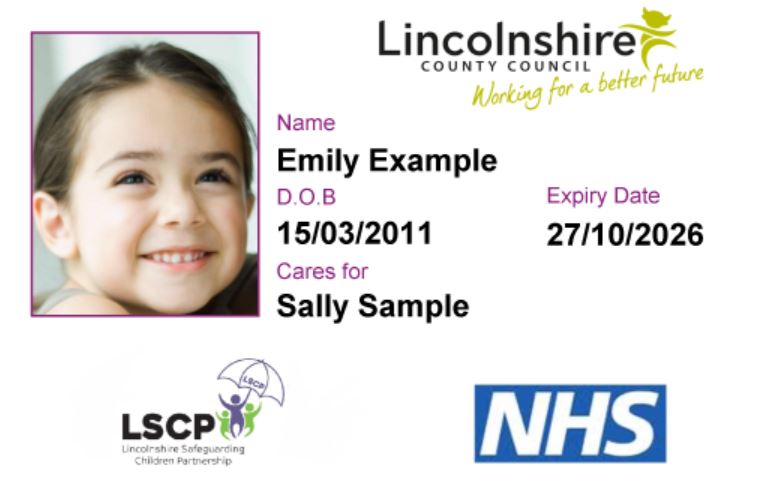
Here is an example of a young carer card.
Sibling carers

Having a sibling with additional needs can lead to some very mixed feelings. Brothers and sisters may feel worried, embarrassed, jealous and sad. You may feel proud of your siblings as they learn new things. There could be times when young carers feel anxious or even scared if they are the target of challenging behaviour.
These feelings are all completely normal.
- “As a young carer I feel tired, but I feel happy my brother has someone by his side because without me, he would not be able to do anything. I help out at home by feeding him through a tube that goes into his belly and helping with his physio on the floor”
- “We have to wait and see if he has had a perfect day because he then won’t be angry”.
We want to recognise the impact children and young people have for supporting their sibling. The support they give to adults providing this care is another form of caring. By taking on extra jobs around the home or reassuring a parent who may be feeling overwhelmed.
Family days out are difficult and can result in having a trip to be cancelled due to a sibling’s needs for example. For lots of siblings, having friends’ round after school can be impossible.
Most of our young carers would not want to swap their brothers or sisters; however, they do want to be recognised for the support they give. It might not look like the caring role adults are taking on but that does not mean it is less valid or valuable.
You're not alone
If you’re a child or young person with a sibling who is disabled, has special educational needs, or a long-term health condition, you’re not alone.
There is support available for you on Young Sibs.
Transitions

If you help look after someone in your family who has a disability, physical illness, mental health difficulty or addiction, and you're aged 16–25, you may be a Young Adult Carer. If you are on our Young Carers Register, we have a duty to make sure we contact you to offer you a Transition conversation about your plans and your caring role and if you need more support, a Transition Assessment might be helpful to make sure you get the support you need. Here’s what we will do to make sure you get the right help, advice and support to make informed decisions about your next steps:
When you reach Year 11
We'll write to you to let you know about the support available and who you can contact if you would like any advice or help. You may be feeling confident about your plans after school and focused on your GCSEs, or you may have other things on your mind. Whatever your situation, that's completely okay. Support is available if and when you need it.
We know that balancing caring responsibilities alongside school, college, work, friendships and your own wellbeing can be challenging. Moving on from school can also bring lots of changes, and we want to make sure you know where to go for support during this time.
When You're 17
Before you are 18, a member of the Young Carers Team, or Adult Carers Services if you have chosen this option, will contact you one final time by phone or text to see whether you would like any ongoing support.
If you decide you don't need support at that time, that's absolutely fine. We will remove your details from the Young Carers Register. However, if your circumstances change in the future or you would like advice about your caring role, support is still available through the Lincolnshire Carers Service.
Find out more at: www.lincolnshirecarersservice.org.uk.